
Soil pH is a measure of the acidity or alkalinity of soil, represented on a logarithmic scale ranging from 0 to 14, with 7 being neutral. Soils with pH values below 7 are acidic, while those above 7 are alkaline. Most soils fall within the range of pH 3 (ultra acid) to pH 10 (extremely alkaline).
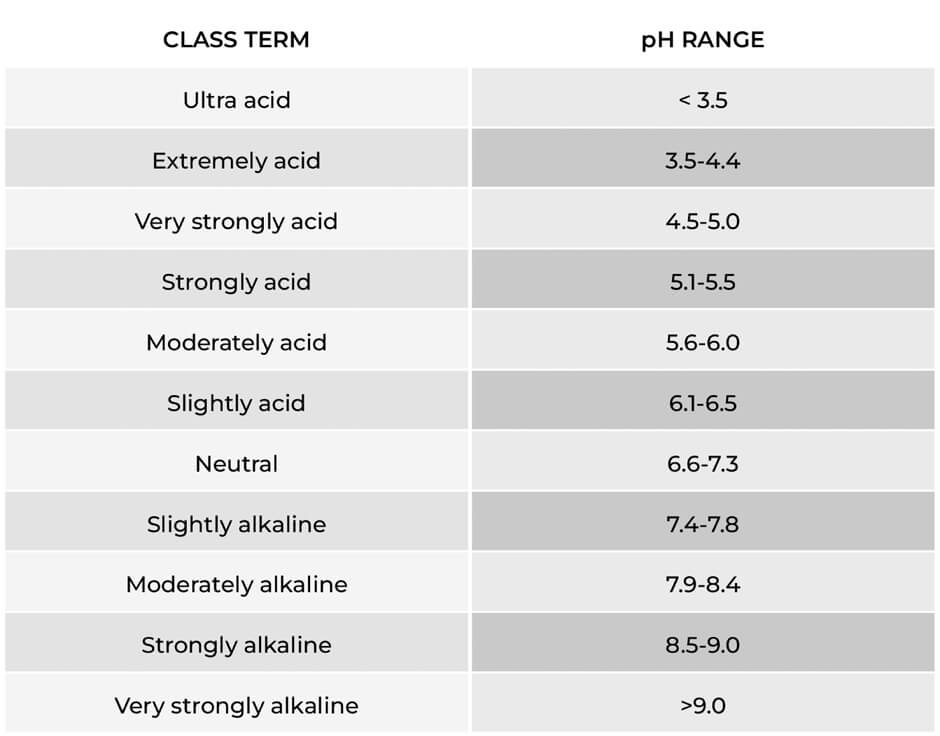
pH of soil classes as defined by the USDA Soil Survey Manual, 2017.
Soil pH is determined by the concentration of hydrogen ions (H⁺) in the soil solution and is influenced by various factors, including parent material, weathering processes, vegetation, precipitation, and human activity such as fertilization and irrigation.
Why Measure Soil pH?
The pH of a soil directly impacts the chemical, biological, and physical processes occurring within the soil environment. It directly affects nutrient availability, microbial activity, and the solubility of minerals, making it a key parameter for evaluating soil health and fertility.
- Nutrient Availability: Soil pH controls the solubility of essential plant nutrients. In acidic soils (low pH), nutrients like phosphorus and potassium become less available, while micronutrients like iron and zinc may become deficient in alkaline soils.
- Microbial Activity: Soil microbes that decompose organic matter and cycle nutrients are highly sensitive to pH. For example, nitrogen-fixing bacteria thrive in a pH range of 6 to 8, and deviations from this range can disrupt nutrient cycling and soil fertility.
- Toxicity: Extreme pH levels can lead to toxic concentrations of certain elements. For example, aluminum solubility increases in acidic soils, leading to potentially toxic conditions that can interfere with root growth.
- Buffering Capacity: Understanding pH helps assess a soil’s buffering capacity, or its ability to resist changes in acidity or alkalinity. This is important for predicting how soil will respond to amendments such as lime or sulfur.
Factors that contribute to lowering soil pH include precipitation (since average rainfall has a pH of 5.6), root respiration, plant growth, and fertilizer application. Weathering of sulfide-rich rock types, particularly at mining sites, also increases acidity.
In contrast, alkalinity results from the presence of minerals like silicates and carbonates introduced by weathering processes, deposition, or alkaline irrigation waters. Factors like poor drainage and arid climate can lead to the accumulation of salts such as sodium carbonate. Agricultural lime is a common amendment used for raising soil pH.
How Is Soil pH Measured?
Several methods are available for soil pH measurement, including manual, laboratory, and continuous measurement alternatives. Simple, low-cost manual methods include pH strips (litmus paper test), colorimetric test kits, and handheld pH meters.
Measurement with pH strips involves dipping the litmus paper into a soil-water mixture and then comparing it to a scale that relates color to pH. This is the simplest, fastest, and least expensive method for soil pH estimation, though the accuracy is limited and subject to interpretation of the color against the scale.
Colorimetry is similar to the litmus test method in that the results of a soil mixture are compared to a color scale. However, the soil mixture is created with chemical reagents rather than water.
Handheld pH meters with an electrode probe present a similarly quick and simple method with better accuracy than color-scale methods. These devices work by detecting the voltage difference between a pH-sensitive electrode and a reference caused by hydrogen ions in the soil solution.
To use a pH meter, soil is typically mixed with distilled water or a specific buffer solution to create a slurry. The probe is then inserted into the slurry, and the meter displays the pH reading. Advanced pH meters may include automatic temperature compensation to ensure accuracy across varying environmental conditions.
For high-precision applications, laboratory analysis provides the most reliable pH measurements. This method involves sending soil samples to a lab, which prepares extracts with distilled water or buffer solutions and analyzes them with specialized equipment.
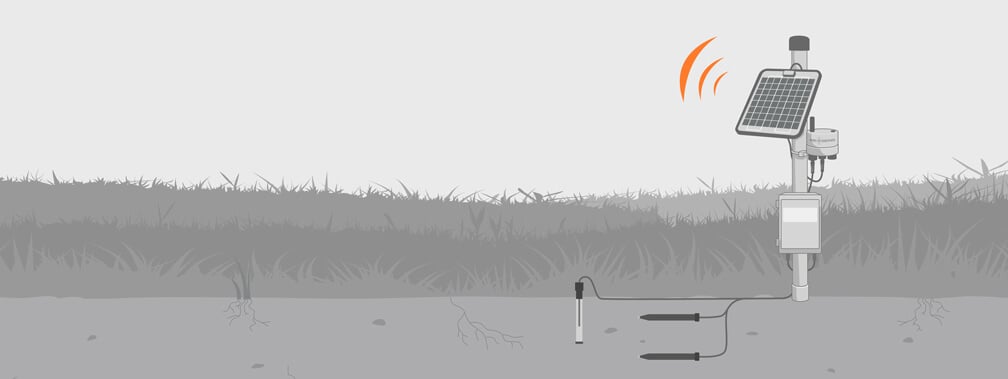
Continuous measurement with in-situ sensor systems is less common for pH than other types of soil measurements, like soil moisture, though some advanced systems are available. These systems typically include electrodes designed to remain embedded in the soil for long periods of time.
One or more pH-sensitive electrodes are inserted into the soil, with a reference electrode placed in close proximity (usually 1m or less from the pH electrodes, though this can vary). The electrodes are wired into a connection module that can read the voltage potential difference between the reference and each electrode. The module then outputs the readings to a data logger that can record the values.
Such systems offer the benefit of high-frequency data acquisition. Some may also work with soil oxidation-reduction potential (ORP or redox) electrodes in addition to pH.
How to Select a Soil pH Sensor?
For soil pH sensor selection, the choice comes down to sensors for handheld meters or continuous measurement systems.
Handheld meter systems offer a convenient method to quickly sample soil pH in field settings with reasonable accuracy. For best results, the meter should be equipped with a thermistor for automatic temperature compensation.
This technique is suitable for spot sampling in applications where soil pH is not expected to change rapidly, such as gardening and agriculture. It makes sampling with relatively large spatial coverage simple and cost-effective but is limited in terms of data frequency.
Continuous measurement systems, on the other hand, allow for high-frequency data collection over long periods of time using permanently installed sensors. This is ideal for research applications and environments where dynamic soil conditions are expected.
The drawback of permanently installed sensors is that they typically require excavation of a soil profile for placement of the probes into the soil layers and depths of interest. This process can disturb the soil dynamics and introduce measurement errors if the sensors are not properly secured and back-filled.
Burying sensors in the soil profile also makes them difficult to access for calibration. In addition, they may be subject to measurement error if rapid drainage or other soil processes create error gaps that cause the probes to lose direct contact with the soil.
What to Consider When Preparing a Soil pH Sensor?
Calibration is essential to soil pH sensor preparation for both handheld meters and continuous monitoring. Aligning the sensor readings with buffers of known pH ensures accuracy of field measurements. Frequent calibration helps to validate measurement results.
Sensor placement is also critical, particularly for continuous monitoring systems where sensors cannot be easily moved. Ensure that sensors are positioned to represent the area of interest. Avoid areas with localized pH anomalies, such as near irrigation sources or fertilizer deposits, unless these conditions are specifically being studied.
How to Deploy a Soil pH Measurement System?
Deploying a continuous soil pH measurement system requires careful planning to ensure accurate and consistent data collection. Proper sensor placement, soil preparation, and integration with a data logging system are essential for reliable long-term monitoring.

Soil pH measurement system installation depends heavily on careful placement of the reference and pH electrodes.
Sensor positioning must be strategically chosen to capture pH variations over time at depths relevant to the application. Root-zone monitoring for agricultural applications typically requires sensors at depths ranging from 10 cm to 50 cm. For environmental studies and research applications, deeper installations may be necessary to monitor the dynamics of a wider range of subsurface layers, or the study may be focused on a specific layer.
If at all possible, sensor placements should also be chosen to allow relatively easy access for maintenance and calibration. However, any soil excavated during installation should be carefully replaced to ensure representative conditions in the area of study and accurate sensor measurements.
When inserting pH probes into the soil, a slightly smaller pilot hole should first be created so that the probe can be pressed in with good soil contact but without using excessive force. Dry soils may need to be moistened to facilitate the installation. The measurement element must make solid contact with the soil, but care must be taken to avoid damage, particularly with glass bulb sensor types.
Install reference electrodes using a similar procedure. Some may include a solid or gel electrolyte to extend the operation time of the system between maintenance. This should be installed with solid contact to the soil, both for measurement accuracy and to prevent leakage that exhausts the electrolyte quickly.
Cabling should be routed to minimize exposure to potential damage from soil movement, wildlife, or field equipment. Using protective conduit or burying cables at an appropriate depth can help ensure long-term durability. Connect to a compatible data logger configured for the appropriate sampling frequency. Telemetry-enabled loggers can provide real-time access to pH data, enabling remote monitoring and timely decision-making for soil management applications.
Conclusion
Soil pH measurement is essential for understanding soil chemistry and biological processes that affect plant health. It can also be useful for detecting contamination, evaluating soil remediation efforts, monitoring acidification trends, and other environmental and research-related applications.
By selecting the appropriate measurement method—whether through manual spot sampling, laboratory analysis, or continuous in-situ monitoring—users can gain valuable insights into soil conditions and make informed decisions regarding soil amendments, irrigation, and other management procedures.
Additional Resources

