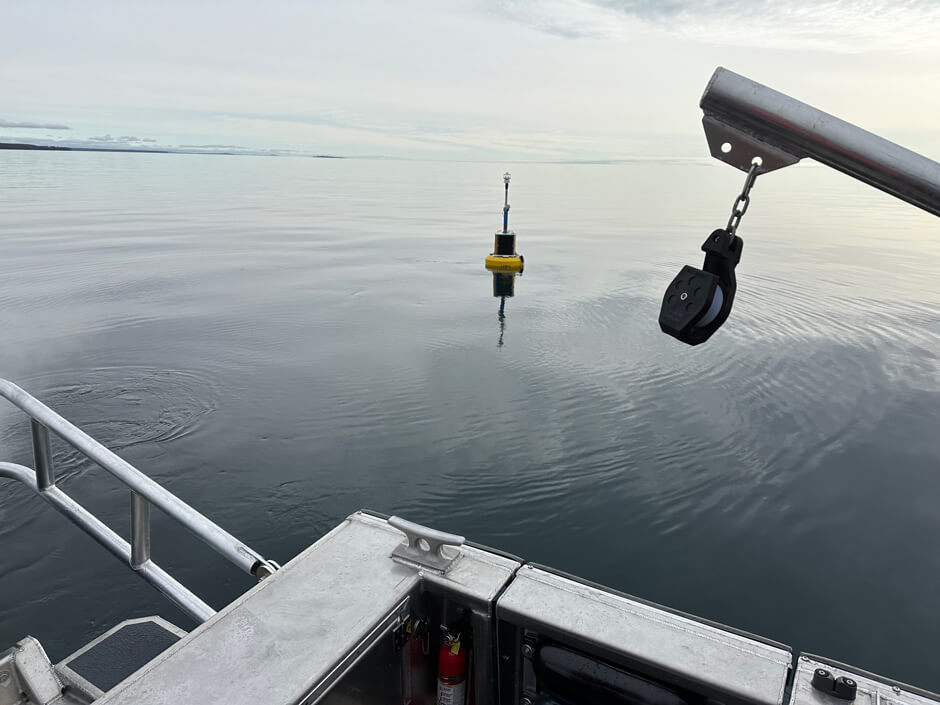
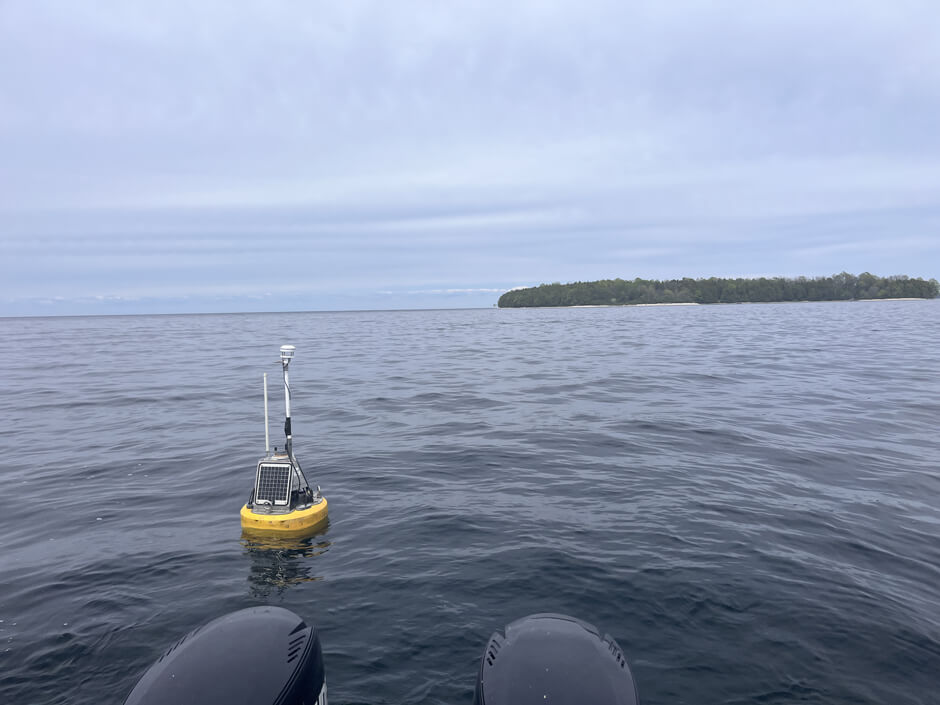
A Panther Buoy deployed in Nicolet Bay (Green Bay) near Peninsula State Park in Wisconsin.

Measuring Cyanobacteria Toxins in the Great Lakes

University of Wisconsin-Milwaukee

Harmful algal bloom (HAB) monitoring has become a popular topic of research in limnology. While most monitoring efforts center on chlorophyll measurement, the real impacts of HABs are connected to the toxins produced by cyanobacterial blooms, which can be challenging to measure. Due to their impact on human health, establishing models that allow for the […]
Read More
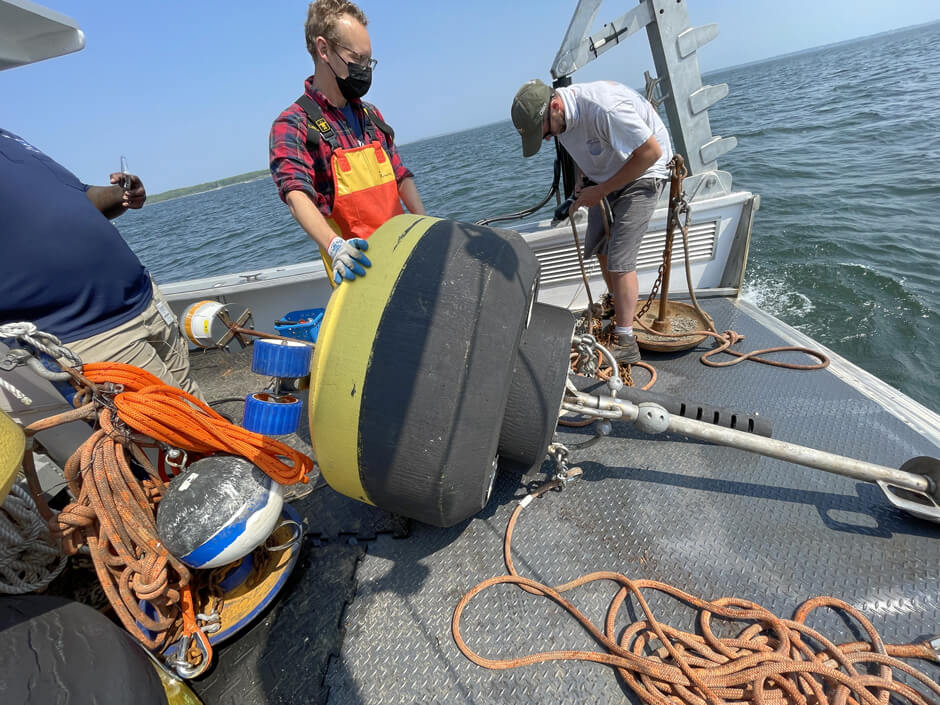
Darryl Sirleaf (NBC, left), Rich Balouskus (RIDEM Principal Marine Biologist, middle), Pat Brown (RIDEM Chafee Captain, right). Installing acoustic receiver on North Prudence Buoy in Narragansett Bay during buoy deployment (2022).

Narragansett Bay Fixed Station Monitoring Network

University of Rhode Island

Water quality monitoring in estuaries prior to the 1990s was labor-intensive and sporadic, as samples had to be collected and brought back to the laboratory to be analyzed using lengthy procedures with specialized equipment and reagents. During the late 1990s, new innovations in automated water quality sensors made it possible to take measurements directly in […]

Read More
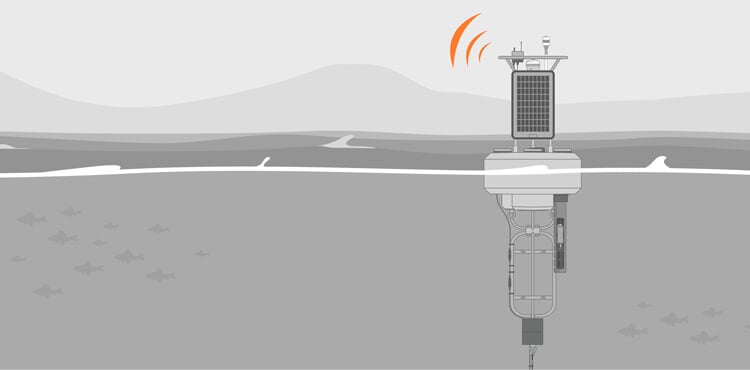
Illustration of a NexSens real-time data buoy. The buoy is equipped with an X3 data logger, multiparameter weather station, thermistor string, and a water quality measurement instrument.

7.2 Open Water Buoys

Open water buoys, also referred to as data buoys, provide a stable, floating platform for deploying environmental monitoring instruments in lakes, rivers, reservoirs, estuaries, bays, and coastal or ocean waters. These systems are essential for collecting real-time data in locations that may be difficult or dangerous to access using traditional methods. Buoys can support a […]

Read More

7.1 Multi-Parameter Monitoring

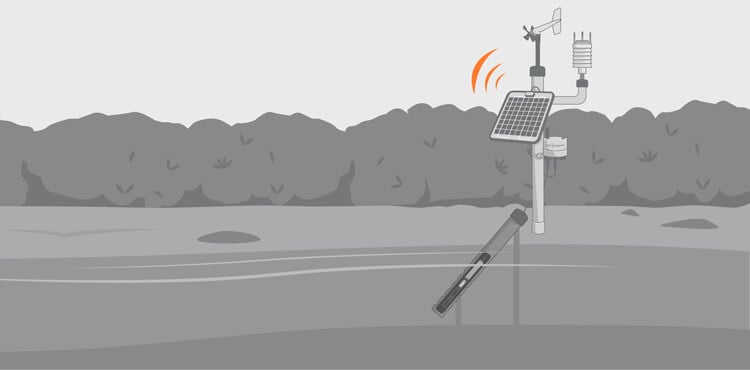
Multi-parameter monitoring platforms enable comprehensive environmental data collection by integrating multiple sensors into a single system. These platforms measure a variety of parameters in water, soil, and air. A multi-parameter platform might include, for example, a weather station and water quality sensors for an environmental study on the effect of local weather conditions on a […]

Read More
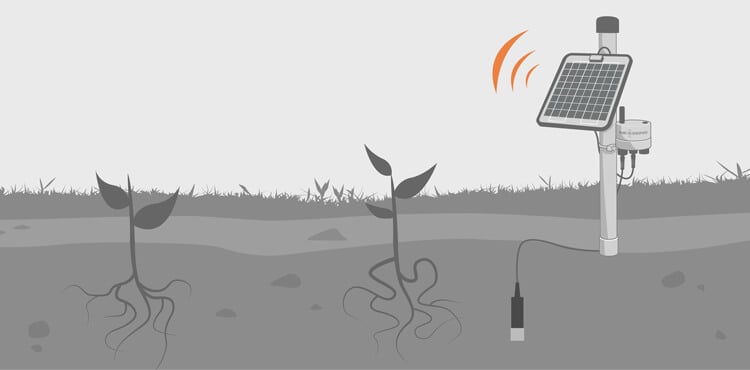
Illustration of a real-time soil oxygen monitoring system. It is a pole mount system with a solar panel, NexSens X3 data logger, and a soil oxygen probe.

6.6 Soil Oxygen

Soil oxygen concentration refers to the amount of oxygen present within the soil matrix, typically expressed as a percentage of the soil’s pore space volume. Well-aerated soils often have oxygen concentrations near atmospheric levels of about 20.95%. It may also include dissolved oxygen in the soil solution. However, oxygen dissolved in soil water is typically […]

Read More
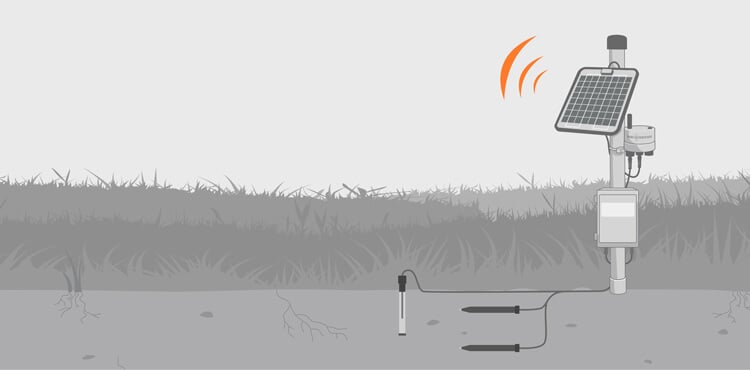
Illustration of a real-time soil pH measurement system that includes a NexSens X3 data logger, solar panel, and two soil PH probes deployed in a field.

6.5 Soil pH

Soil pH is a measure of the acidity or alkalinity of soil, represented on a logarithmic scale ranging from 0 to 14, with 7 being neutral. Soils with pH values below 7 are acidic, while those above 7 are alkaline. Most soils fall within the range of pH 3 (ultra acid) to pH 10 (extremely […]

Read More
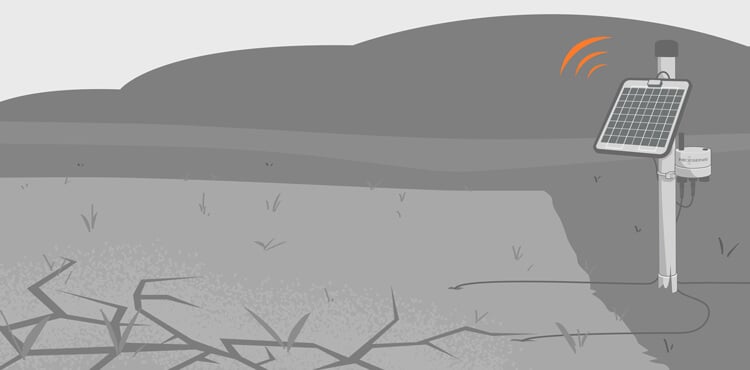
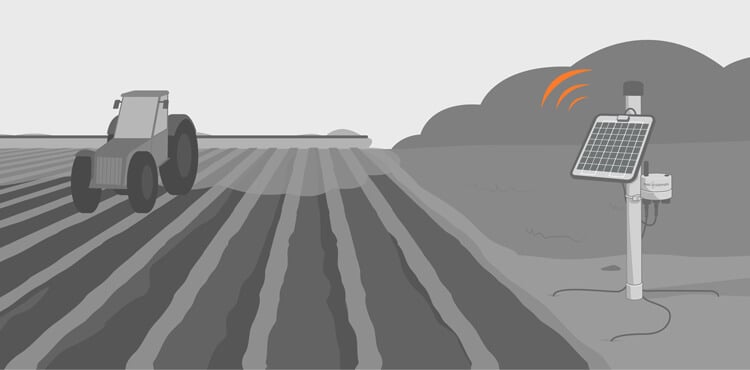
Illustration of a real-time soil salinity monitoring system. A dry field takes up the left portion of the image and a pole mount system with a NexSens data logger, solar panel, and conductivity sensor attached is on the right.

6.4 Soil Salinity

Soil salinity refers to the concentration of salts found in soil water. Common soil salts include chlorides like sodium chloride and calcium chloride, as well as some carbonate compounds like lime (calcium carbonate) and sulphate compounds like gypsum (calcium sulphate). Salinity is closely related to soil conductivity as dissolved salt ions are the primary source […]

Read More
Illustration of a real-time soil conductivity sensing system.

6.3 Electrical Conductivity

Soil conductivity, often referred to as electrical conductivity (EC), measures the ability of soil to conduct electrical current. This property is determined by the presence of dissolved salts and other charged particles (ions) in the soil solution. Conductivity is directly influenced by soil moisture, temperature, and salinity, as water and dissolved ions serve as the […]

Read More
The Keweenaw South Entry buoy (NDBC 45025) after deployment, with Rabbit Island in the background.

Targeted Monitoring Solutions in the Great Lakes

Great Lakes Research Center

The Great Lakes are in a state of rapid and continuous change resulting from a host of environmental and anthropogenic stressors. Such circumstances require unique, targeted monitoring solutions to meet environmental demands and continuously document these changes. Hayden Henderson, a research engineer with the Great Lakes Research Center (GLRC), designs such systems, working with research […]

Read More