
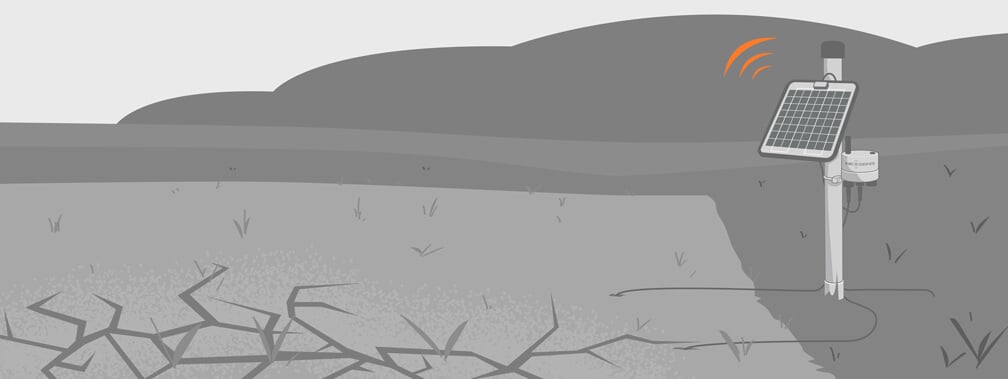
Soil salinity refers to the concentration of salts found in soil water. Common soil salts include chlorides like sodium chloride and calcium chloride, as well as some carbonate compounds like lime (calcium carbonate) and sulphate compounds like gypsum (calcium sulphate).
Salinity is closely related to soil conductivity as dissolved salt ions are the primary source of electrical conductivity in soils. Soil EC is, therefore, often used as a surrogate for salinity measurement, with salinity values being expressed in conductivity units like deciSiemens per meter (dS/m), and soils being considered saline when the EC exceeds 4 dS/m.
However, soil EC may also be influenced by non-salt ions and the moisture content of the soil. Therefore, it is not always an accurate representation of true salinity. Actual salt concentrations determined through laboratory total dissolved solids (TDS) analysis are typically represented in milligrams per liter (mg/L) or parts per million (ppm).
Why Measure Soil Salinity?
Salinity has a significant impact on plant growth and soil health. Although salt occurs naturally in all soils, introduced by sources such as weathering of primary rock materials, the buildup of excess salinity above naturally occurring levels is generally not beneficial.
High salinity levels can inhibit plant growth by reducing the availability of water, a phenomenon known as osmotic stress. Salt content also directly affects microbial activity and nutrient availability, which are critical for healthy soil ecosystems.
Some key applications of salinity measurement include:
- Agriculture: Salinity data helps optimize crop selection, irrigation practices, and soil amendments. Identifying saline soils early can help prevent yield losses.
- Irrigation Management: Monitoring salinity ensures that irrigation does not contribute excess salt, especially in regions relying on groundwater or reused water.
- Rehabilitation of Degraded Land: In saline-affected areas, long-term data supports strategies to reclaim soil for agricultural or ecological purposes.
- Environmental Monitoring: Salinity levels indicate the impact of industrial processes, mining, and urban runoff on soil and water systems.
- Hydroponics and Controlled Environments: Controlling salt content is critical for nutrient balance in systems without soil buffering capacity.
How Is Soil Salinity Measured?
In continuous monitoring applications, salinity is measured using many of the same sensor technologies as soil conductivity, including capacitive, time-domain reflectometry (TDR), and dielectric impedance sensors.
For a more precise assessment of salt content, soil samples may be analyzed in a laboratory for TDS. Common laboratory TDS methods include spectrophotometry to determine the proportion and composition of salt species and the gravimetric method, where a known sample volume is dried in an oven, and the remaining solids are weighed.
Soil electrical conductivity (EC) is commonly measured in the lab as well by preparing soil extracts from mixing a soil sample with distilled water. Combining laboratory EC measurements with TDS analysis can help to interpret field EC measurements and improve salinity estimation for a specific soil and application.
How to Select a Soil Salinity Sensor?
Since field salinity estimation depends on accurate soil conductivity readings, it is important to select a conductivity sensor that is well-suited for the application.
For general monitoring in applications such as agriculture or landscaping, capacitance-based sensors are an affordable and practical option. These sensors provide reasonable accuracy for tracking trends in salinity levels and can be used to aid in developing site-specific irrigation and fertilization plans. For research and other advanced applications, TDR or dielectric impedance sensors may be able to achieve high accuracy.
Many sensor designs are for single-point measurements at a specific depth, though multi-depth profiling configurations are also available. This can be useful to gather information through the entire root zone of a plant species or to study the movement of salts and nutrients through soils.
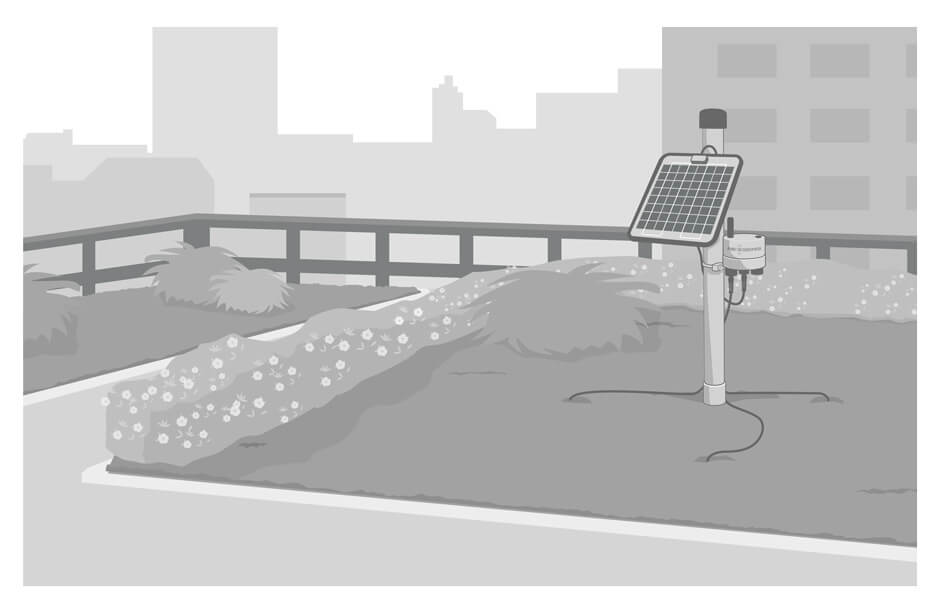
Soil salinity is derived from soil conductivity and depends, therefore, on obtaining accurate bulk EC measurements.
Conclusion
Salinity measurement is closely tied to soil electrical conductivity, but with a specific focus on dissolved salts that influence water availability and soil health. Accurate monitoring of salt concentrations supports effective management of crops, water, and soil resources, helping to prevent salinization and maintain productivity.
By integrating robust sensors with proper calibration and systematic deployment, salinity data can guide sustainable practices across agricultural and environmental applications, ensuring the long-term viability of soils and ecosystems.
Additional Resources

