
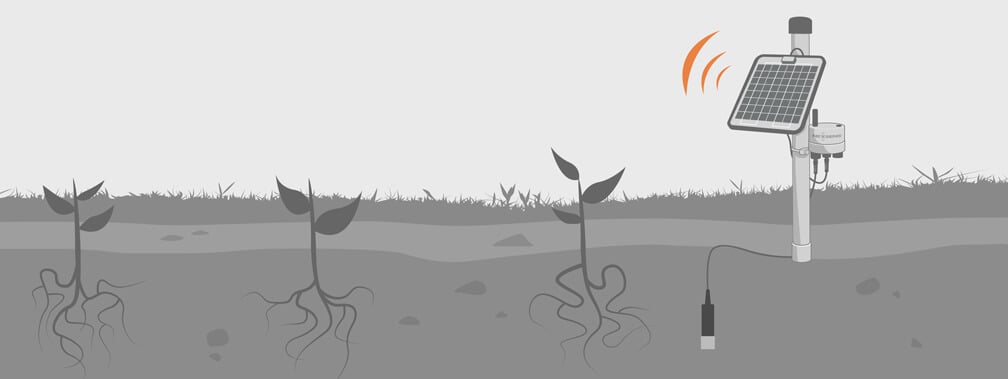
Soil oxygen concentration refers to the amount of oxygen present within the soil matrix, typically expressed as a percentage of the soil’s pore space volume. Well-aerated soils often have oxygen concentrations near atmospheric levels of about 20.95%.
It may also include dissolved oxygen in the soil solution. However, oxygen dissolved in soil water is typically much lower, often ranging from 5 to 10 mg/L.
Factors that may decrease soil oxygen include soil compaction, excessive moisture, high microbial respiration rates, and poor drainage, all of which can limit oxygen diffusion and create anaerobic conditions. Soils also vary in their total amount of pore space depending on soil texture and soil structure.
Why Measure Soil Oxygen?
Monitoring soil oxygen levels is important to various applications and processes:
- Plant Root Respiration: Adequate oxygen is necessary for root respiration, which supports energy production and nutrient uptake. Oxygen-deficient soils can lead to root hypoxia, impairing plant growth and reducing crop yields.
- Microbial Activity: Soil microorganisms require oxygen to decompose organic matter and cycle nutrients. Low oxygen conditions can shift microbial communities towards anaerobic processes, potentially leading to the accumulation of harmful byproducts and reduced nutrient availability.
- Greenhouse Gas Emissions: Oxygen levels influence the production and consumption of greenhouse gases such as methane and nitrous oxide. Anaerobic conditions can enhance methane production, while adequate oxygen can promote the oxidation of methane, mitigating its release into the atmosphere.
How Is Soil Oxygen Measured?
Galvanic electrochemical sensors are among the most widely used technologies for in-situ monitoring of soil oxygen. These operate based on an electrochemical reaction between oxygen and electrodes within the sensor.
The key components include an anode, typically made of lead or zinc, and a cathode composed of a noble metal such as gold or silver. These electrodes are immersed in an electrolyte solution, which facilitates the reaction. A gas-permeable membrane allows oxygen to diffuse into the sensor while preventing the electrolyte from leaking out.
Galvanic soil oxygen sensors diffuse oxygen through a permeable membrane and generate an electric current based on concentration.

Galvanic soil oxygen sensors diffuse oxygen through a permeable membrane and generate an electric current based on concentration.
When oxygen enters the sensor, it reacts at the cathode, generating an electrical current proportional to the oxygen concentration. This current is then measured and converted into an oxygen concentration value, typically expressed as a percentage of the air-filled pore space or as partial pressure in kilopascals (kPa).
Some sensors may also include an internal resistor to convert the current to a voltage signal expressed in millivolts (mV).
How to Select a Soil Oxygen Sensor?
Galvanic soil oxygen sensors are preferred over polarographic sensors because they do not require an external power source, as they generate their own electrical current. Their rapid response time allows them to detect dynamic changes in soil oxygen levels quickly, making them valuable for applications where oxygen concentrations vary over time.
Galvanic oxygen sensors are also less affected by water content. However, under some conditions, condensation on the sensor membrane can cause measurement interference. To counteract this, many sensors are equipped with a heating element. This should always be used in any application where there is potential for condensation.
For applications where soil sensors will be buried and, therefore, difficult to access, choosing a sensor that does not require frequent calibration is preferred. Many galvanic sensor types can operate for several years before they must be recalibrated or replaced.
What to Consider When Preparing a Soil Oxygen Sensor?
When preparing a soil oxygen sensor, consider checking the signal output with the sensor in the air. This can be done with a current meter or voltmeter, depending on the output, though it should ideally be checked with the data logger to be used for field measurements prior to installation.
With the sensor in a well-ventilated area, record the output along with the air temperature, barometric pressure, and humidity at the time of the measurement. Avoid breathing on the sensor to avoid measurement disturbance. This gives a baseline reading of the sensor response at 20.95% oxygen (value for ambient air).
Most sensors designed for burial in soils include a diffusion head that creates an air space in front of the sensor membrane for measurement accuracy. Ensure that the diffusion head is securely installed and free from debris.
How to Deploy a Soil Oxygen Measurement System?
Deploying a continuous, long-term soil oxygen measurement system typically requires burial of one or more sensors in the area of interest and potentially at multiple depths. Sensor locations should be chosen to cover a representative area, such as within the root zone for agricultural applications. They may include redundant measurements for verification, comparative measurements in different soil zones, and control measurements taken outside of the cultivated area or area of study.
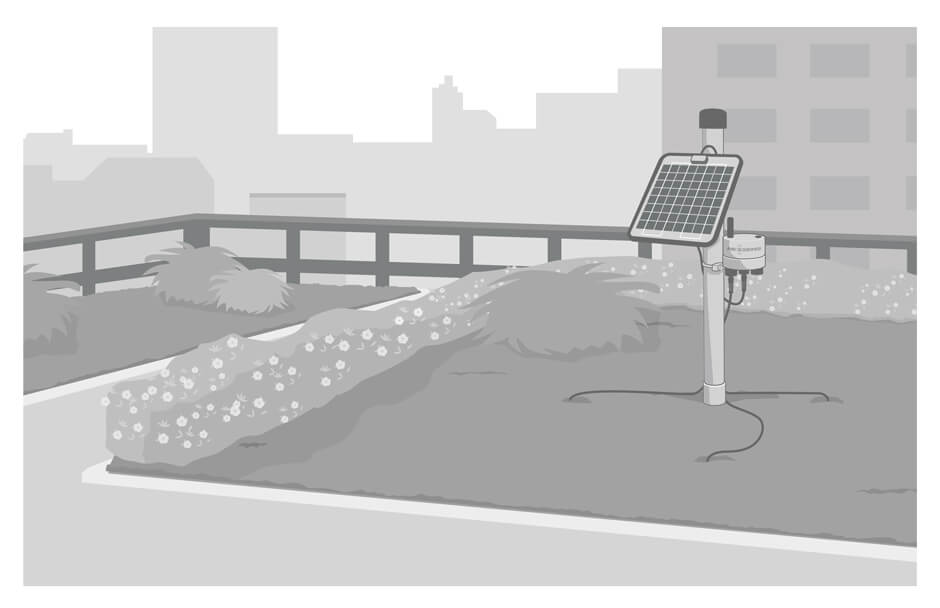
A typical oil oxygen measurement system consists of several sensors at different depths or locations connected to a central data logger.
A typical oil oxygen measurement system consists of several sensors at different depths or locations connected to a central data logger.
The robustness of the sensor should be taken into account during installation. For example, the diffusion head of a sensor may be subject to relatively large forces if buried deep in the soil, or even in a shallow layer that may be compacted, for example, by farm equipment. If necessary, add reinforcement to the sensor placement sites to protect from damage.
Once installed, sensor cables should be buried or protected in conduit as needed, as they are routed to the data logging system or telemetry device for continuous monitoring. The sampling frequency should be set according to the application—higher frequencies may be required for dynamic environments where oxygen levels fluctuate rapidly, while lower frequencies may be sufficient for long-term trend analysis.
Conclusion
Soil oxygen measurement is essential for assessing soil fertility, ecosystem balance, and gas processes. Understanding the factors that affect soil oxygen availability—such as moisture, compaction, and microbial activity—allows for better management practices to optimize soil health and productivity.
The use of galvanic sensors provides a reliable and efficient way to monitor oxygen dynamics in real-time, making them valuable tools for agricultural, environmental, and research applications. By carefully selecting, preparing, and deploying sensors, users can ensure accurate and long-term monitoring of soil oxygen conditions.
Additional Resources

