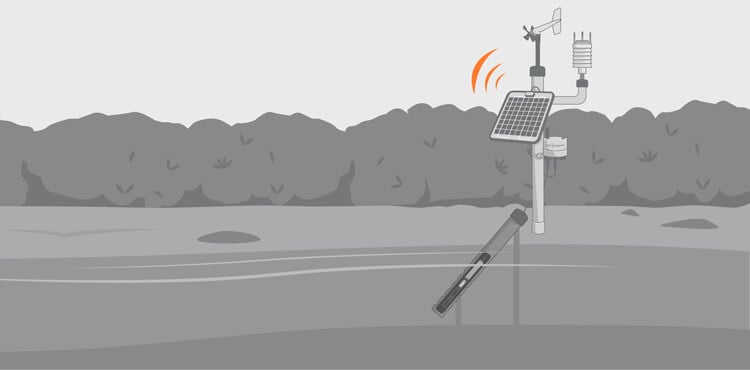
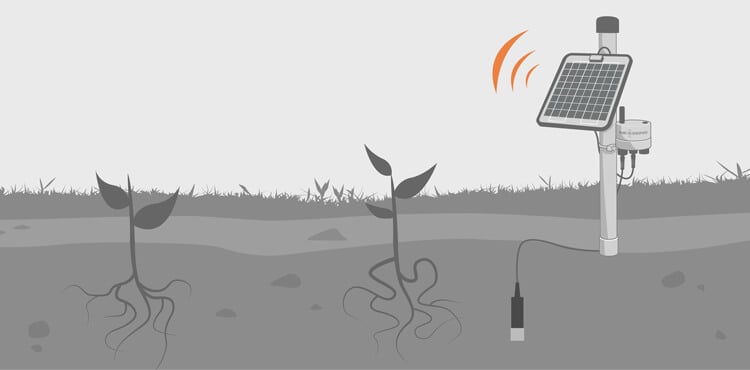
Multi-parameter monitoring platforms enable comprehensive environmental data collection by integrating multiple sensors into a single system. These platforms measure a variety of parameters in water, soil, and air. A multi-parameter platform might include, for example, a weather station and water quality sensors for an environmental study on the effect of local weather conditions on a […]
Read More →
Soil oxygen concentration refers to the amount of oxygen present within the soil matrix, typically expressed as a percentage of the soil’s pore space volume. Well-aerated soils often have oxygen concentrations near atmospheric levels of about 20.95%. It may also include dissolved oxygen in the soil solution. However, oxygen dissolved in soil water is typically […]
Read More →
Multiple NexSens data logger models and CB-MCL wet-mate lids include male and female Micro-Circular Bulkhead (MCBH) connectors compatible with Micro-Circular In-line (MCIL) sensor connectors. These connectors are designed for use in wet conditions (not while submerged) as they force out water as connectors are mated. Like other connector types, MCBH and MCIL connectors still require […]
Read More →
Water monitoring buoys are an easy and cost-efficient way to conduct research and monitor water quality reliably, with highly accurate data.
Read More →
All X-Series data logger systems incorporate multiple waterproof UW sensor ports with available sensor interfaces including SDI-12, RS-485 and RS-232. This allows for compatibility with a wide range of sensors and data transmission protocols such as SDI-12, NMEA0183 and Modbus. Many compatible sensors can be automatically detected by X-Series loggers, while others require custom configurations […]
Read More →
If an X-Series data logger fails to detect a connected sensor following the completion of the auto-detection process, verify the following: Check for proper wiring of sensor signals and seating of all cable connections. Verify that the script for the sensor has been developed, loaded onto the logger, and enabled to run. Confirm the required […]
Read More →
Chromophoric dissolved organic matter is measured in-situ by using fluorometers to measure the fluorescence of CDOM, which allows scientists to understand the type and quantity in a water body.
Read More →
When it comes to precision, accuracy, and more data over more time, these kinds of dissolved oxygen sensors are the best option for monitoring DO.
Read More →
The seemingly simple question of, “how do I get my data?” can be complicated to answer, so we explore why wireless water quality monitoring options are so important to users, what today’s monitoring options look like, and the solutions the technology presents for users.
Read More →