
Articles Tagged: Knowledge Base
Tag new knowledge base for search
TriOS NICO UV Nitrate Sensor – FAQ
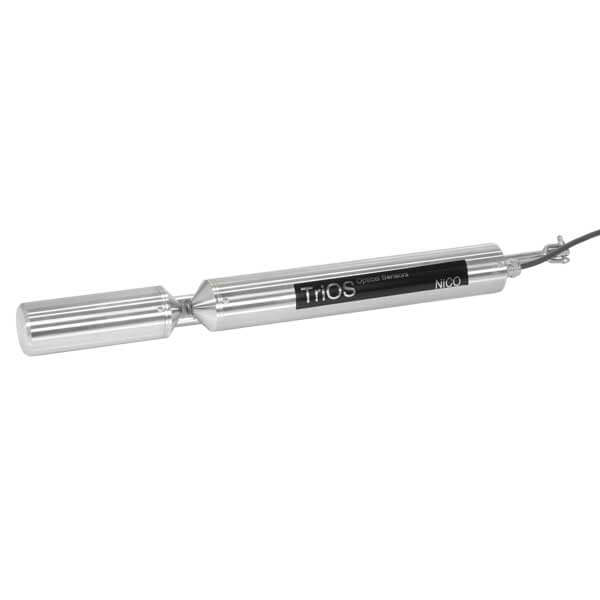
TriOS Wiring for Connection to an X2 Data Logger
This article serves as a guide for wiring in a TriOS NICO UV Nitrate sensor and a W55 wiper for connection to an X2 data logger. This configuration typically occurs with a NexSens A50 Junction Box to protect all flying lead cables from environmental disturbances. TriOS Sensor and Wiper Wiring TriOS M12 to bare wire […]
How do I repair a NexSens buoy hull?
Throughout multiple deployments, harsh conditions such as heavy debris loads, accidental collisions with boats and other equipment, and extreme UV exposure can damage a NexSens buoy hull. NexSens recommends the following for buoy hull repairs. For small cuts and gashes: Clean, dry and patch with 3MTM Marine Adhesive Sealant 5200. For repairing the yellow, polyurea […]
OTT SVR 100 X-Series Integration Guide
The OTT SVR 100 Surface Velocity Radar Sensor is designed for measuring flow in open channels and rivers. The sensor is compatible with NexSens X-Series data loggers utilizing the SDI-12 communication protocol and sensor interface. Parameter data is transmitted, in real-time, at a user-specified interval (e.g., 10 minutes) to the NexSens WQData LIVE Web Datacenter. There, […]
Enable Iridium Communication on an X-Series Data Logger
Satellite/Iridium transmission is more expensive than other traditional forms of communication (e.g., cellular, radio, Wi-Fi). Therefore, it is imperative that the end-user only transmit the most useful diagnostic and sensor parameters. The CONNECT software can set these parameters before the data logger transfers data to the web, thus reducing the overall data transfer. If a […]
CB-25 Data Buoy – FAQ
CB-25 Data Buoy Resource Library
Datasheet How To FAQ Warranty Service Request
What sensor scripts are available on X-Series loggers?
X-Series loggers come pre-loaded with scripts for a host of environmental sensors that communicate over standard protocols such as SDI-12, NMEA0183, RS-232, and RS-485 Modbus. The entire script list is visible within the CONNECT software; however, only a few are enabled by default. Before running a sensor detection, it is imperative to review this default […]