
Soil temperature is the measure of heat (kinetic energy) within the soil, influenced by factors such as solar radiation, air temperature, soil composition, moisture content, and depth. Soils store heat during the day and act as a heat source at night.
The transfer of heat through the soil occurs via conduction, with heat moving from warmer to cooler areas. Soil temperature is dynamic, fluctuating diurnally and seasonally, and can vary significantly with depth.
Temperature directly impacts many processes occurring in soil. For example, microbial activity, plant root growth, and nutrient cycling are all temperature-dependent.
Why Measure Soil Temperature?
Soil temperature is a fundamental aspect of soil health. It directly impacts biological, chemical, and physical processes, making it a parameter of interest for a variety of applications, including:
- Agriculture and Horticulture: Soil temperature influences seed germination, root development, and microbial activity essential for nutrient cycling. Monitoring temperature helps optimize planting schedules and irrigation management.
- Environmental Monitoring: Soil temperature serves as an indicator of ecosystem health, affecting processes such as carbon and nitrogen cycling, decomposition rates, and the behavior of soil-dwelling organisms.
- Construction: Soil temperature impacts the freezing and thawing cycles that affect soil stability, foundation design, and earthworks.
- Frost Prediction and Management: Monitoring soil temperature near the surface helps predict frost events, allowing for the protection of crops and infrastructure from potential damage.
- Permafrost and Climate Studies: Long-term soil temperature data are crucial for studying permafrost dynamics, which are closely tied to global climate change and carbon release.
How Is Soil Temperature Measured?
There are several sensor types available for soil temperature measurement, including thermistors, thermocouples, resistance temperature detectors (RTDs), and infrared sensors.
Thermistors are temperature-sensitive resistors whose electrical resistance changes inversely as they warm or cool. They are highly sensitive and widely used in temperature monitoring for their accuracy and low cost.
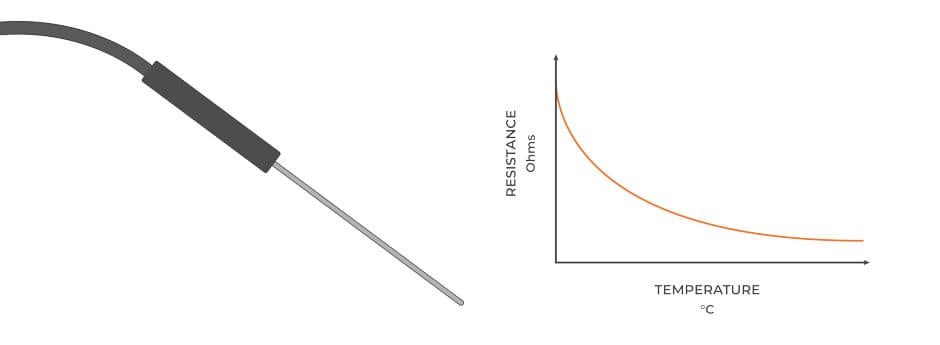
The electrical resistance of a thermistor decreases as temperature increases.
Thermocouples consist of two dissimilar metals joined at one end. The temperature difference between the junction and a reference point generates a voltage, which can be measured to calculate soil temperature. They are durable and suitable for harsh environments.
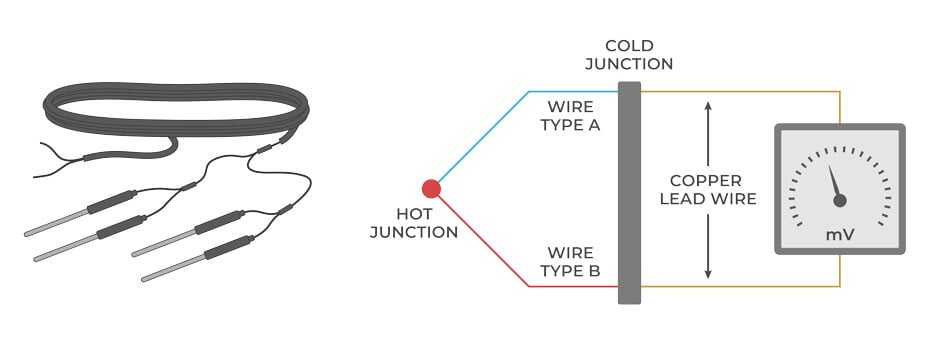
Thermocouples generate a voltage that varies with temperature.
RTDs are similar to thermistors in that they also measure using resistance, but they have a linear relationship with increasing resistance as the temperature increases. RTDs are usually made from pure metals like platinum, which is preferred for its high accuracy and stability.
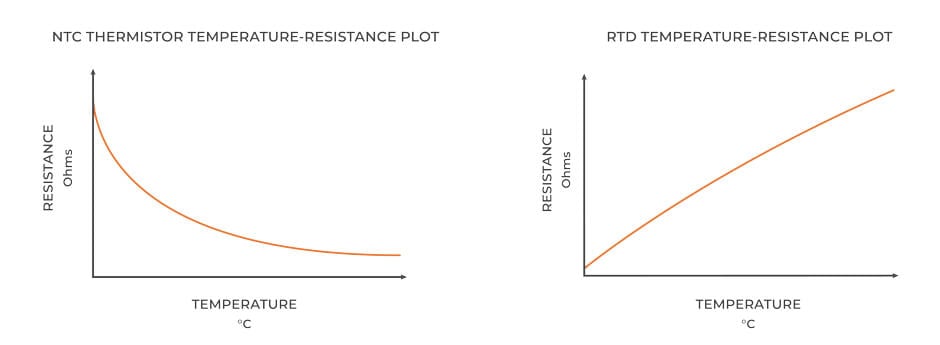
The electrical resistance of an RTD increases with rising temperatures.
Infrared sensors measure soil surface temperature without direct contact by detecting emitted thermal radiation. They measure using a thermopile, which consists of multiple thermocouples connected in series or parallel. When infrared radiation strikes the thermopile, it generates a voltage based on the temperature gradient between the sensing junction and a reference point.
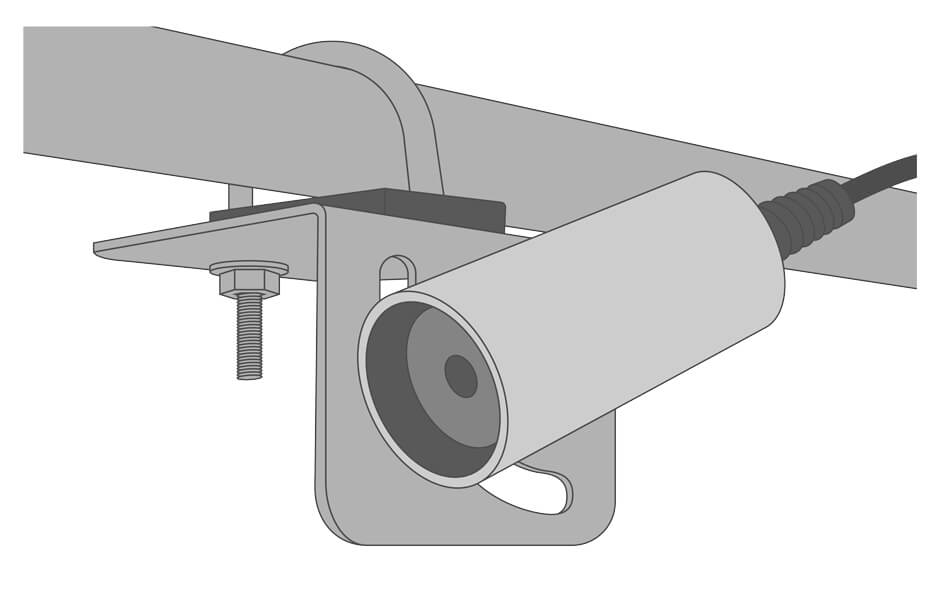
Infrared sensors offer a non-contact option for surface temperature measurement.
How to Select a Soil Temperature Sensor?
Choosing the right soil temperature sensor depends on factors such as application needs, environmental conditions, and desired accuracy.
Measurement depth varies by application and is often a critical factor. For subsurface temperature measurement applications such as root zone monitoring or energy balance studies, sensors can be buried or inserted into the soil column.
Profiling applications with measurements at multiple depths can be achieved by burying multiple sensors or using specialized profiling probes with multiple sensors built into a rod that is inserted vertically into the soil.

Soil temperature profiling can be achieved with individual sensors placed at multiple depths or with multi-sensor probe configurations.
Profiling is only possible with thermistors, thermocouples, or RTDs. Infrared sensors measure the soil surface temperature only and are ideal for applications such as frost prediction or plant canopy temperature monitoring.
If the application also requires other measurement parameters, the temperature measurement may be combined with another instrument. For example, many soil moisture sensors also measure temperature.
Regardless of application, the sensor must meet durability and accuracy requirements and withstand exposure to moisture, soil movement, and temperature extremes. Durable housings and waterproof designs are critical for long-term use.
For research or precision agriculture, high-accuracy sensors like RTDs or thermistors are ideal. General monitoring may not require the same level of precision.
What to Consider When Preparing a Soil Temperature Sensor?
Sensor calibration is one of the primary factors to consider when preparing a temperature measurement system.
If accuracy is critical, consider whether the sensor can be recalibrated or if the standard factory calibration is traceable to a standard methods organization such as NIST (National Institute of Standards and Technology, US) or ISO (International Organization for Standardization).
Analyze the expected drift of the sensor for long-term applications and consider if or how often the sensor should be retrieved for recalibration. If recalibration is not possible, sensors may also be compared to a reference temperature measurement and then set with a custom calibration using an offset.
How to Deploy a Soil Temperature Measurement System?
Deploying a continuous soil temperature measurement system involves selecting the appropriate sensor layout, ensuring proper installation, and integrating the sensors with a data logging system.
Begin by planning the number of sensors and their placement based on the application’s requirements. For example, agricultural applications may require sensors at root zone depth, while environmental monitoring may call for sensors placed at multiple depths to track thermal gradients.
When installing the sensors, take care to ensure solid contact with the soil. Avoid air gaps around the sensor by pressing it firmly into the soil or using a pilot hole slightly smaller than the sensor’s diameter for insertion. If the soil is loose or rocky, a small amount of soil slurry can be used to improve contact, allowing it to settle before taking readings.
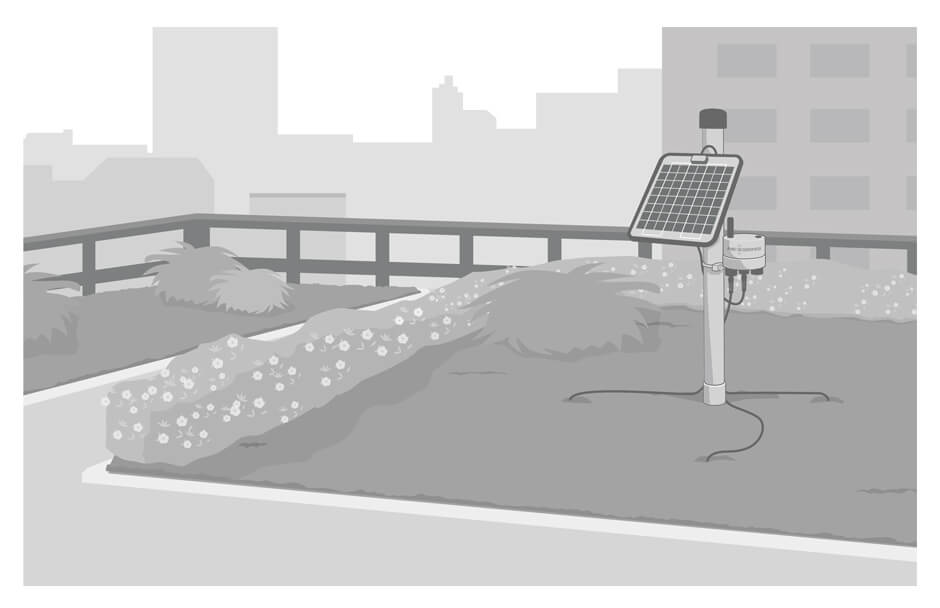
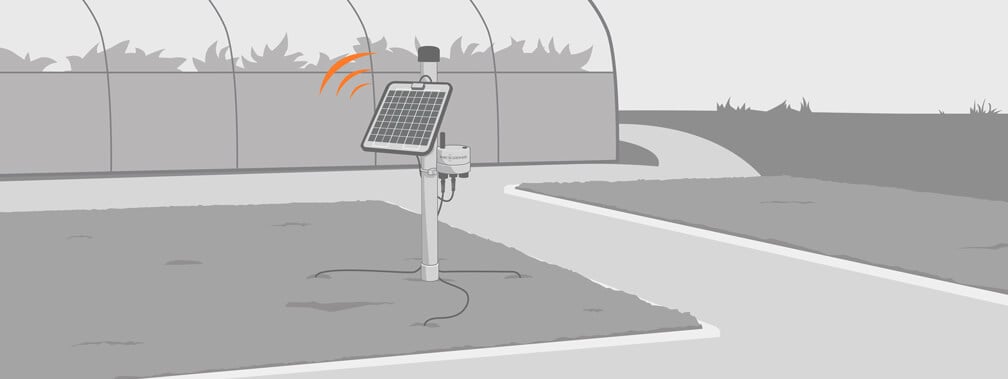
A typical soil temperature measurement system consists of a data logger with one or more sensors placed in the surrounding area.
Cabling is another important aspect. Route sensor cables carefully to avoid damage from soil movement, animals, or equipment. Use protective conduit for buried cables, ensuring they are positioned away from activities that will disturb the soil.
Connect the sensors to a compatible data logger for automated recording. Some loggers may have specialized inputs for thermistors or thermocouples, while others may rely on standardized digital protocols to communicate readings.
Conclusion
Soil temperature is a relatively simple yet essential parameter influencing many processes that occur within the soil. Accurate soil temperature data is key to understanding processes such as microbial activity, nutrient cycling, and thermal gradients that influence plant growth, soil stability, and broader environmental changes.
Soil temperature measurement is, therefore, a practice important to many fields including agriculture, construction, general environmental monitoring, and climate studies. By utilizing appropriate sensors and deploying them effectively, users can ensure reliable, continuous temperature monitoring with autonomous data logging systems.
Additional Resources

