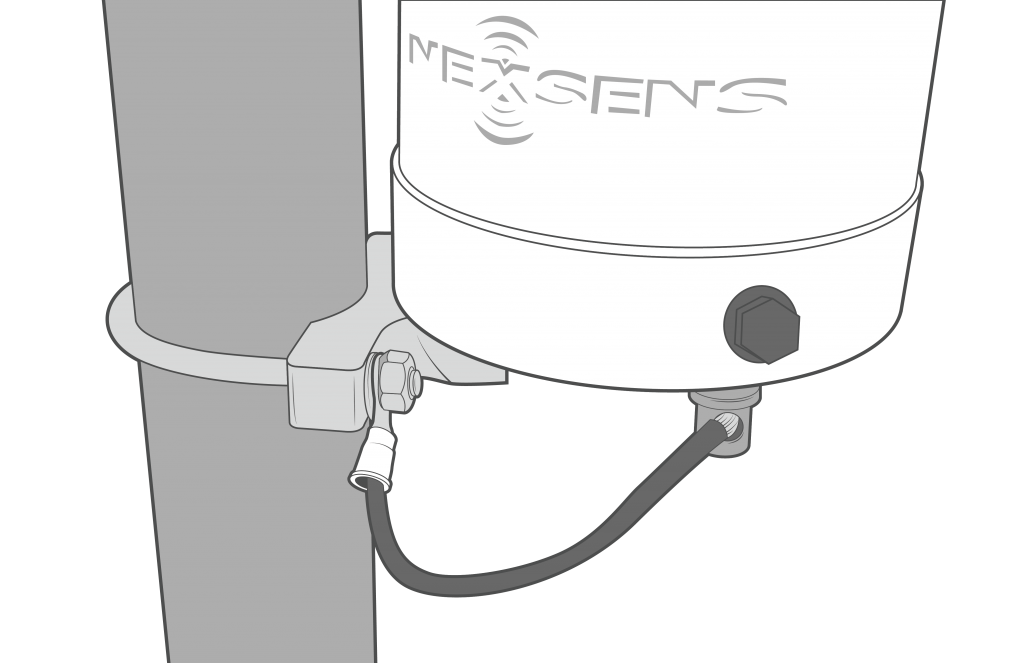
Electrical grounding is a commonly misunderstood and improperly implemented component of Environmental Monitoring Systems. Systems that do not use electrical grounding components can experience either complete system failures or continuous intermittent and hard to diagnose problems. However, just using these devices is not enough. Improper installation of electrical grounding components can render the components ineffective. Installing a system with the proper grounding equipment and following proper installation guidelines can reduce potential down time as well as costly repairs to system electronics.
Why implement grounding protection
Most data loggers and sensors are made from delicate silicon chips such as microprocessors and other integrated circuitry. This equipment can become easily damaged by transient voltages such as power surges and spikes. These surges and spikes can cause permanent damage, such as a near by lightning strike that burn electronics and wires. They may also cause small latent failures that erode equipment and overtime cause permanent damage. These small latent failures are the most troublesome failures to diagnose because it appears as if the electronics has just simply failed one day; when in fact it had been prone to continuous intermittent power surges and spikes, continually eroding its performance.
Implementing proper grounding techniques not only protects from the most permanent damage surges and spikes, but more importantly, keeps a system from experiencing the ill effects of latent system failures.
What causes power surges and spikes
Voltage surges and spikes that damage the circuitry of data loggers and sensors travel through the easiest access point: cables into and out of the data logger. These cables can be the wires bringing in sensor signals or the RF coax cable or telephone wires bringing in telemetry communication. These power surges and spikes are most commonly caused by:
1. Lightning
2. Other Electrical Systems
3. Electrostatic discharge (ESD)
Lightning:
Lightning is the most commonly thought of power surge or spike that damages electronic devices.
Lightning can damage a system in two ways: from a direct strike, or from transient voltage surges that travel from the direct strike into nearby areas. Nothing can prevent damage from a direct lightning strike. When installing systems in lightning prone areas, or where telemetry poles or antennas are located at higher elevations than its surroundings, lightning rods should be installed. Lightning rods do not attract lightning; they simply divert lightning strikes from causing direct-strike damage to nearby areas. Surge protection devices can then protect against the damaging surges traveling from the direct strike. As will all surge devices, lightning rods must be properly grounded to be effective. More information is detailed below in the Installation section.
While it may seem rare that a lightning strike would occur, it is more common than one would think. Damage from lightning strikes traveling through telephone lines, or RF coax cables occurs frequently and ruins data loggers, sensors, and telemetry modems. Additionally, and far worse, is when the surges cause latent unexpected failures that bring down the system during a calm blue sky day.
Other Electrical Systems:
Surges may even come from within a building or facility from such things as fax machines, copiers, air conditioners, elevators, or motors/pumps, to name a few. These devices typically run on high AC voltages. It is best to keep environmental data logging equipment away from such devices, including sensor cable runs as signals generated from electric motors induce large noises onto the signal.
Electrostatic discharge (ESD):
Electrostatic discharge, called ESD, is caused by rubbing two non-conducting materials together. This causes electrons to transfer from one non-conducting material to another. ESD is the shock caused by touching a doorknob after shuffling across a carpet. This ESD is typically in excess of 10kV (10,000 Volts) and can be very damaging to sensitive electronics. Most, if not all, data loggers and sensors on the market today have built in ESD protection to protect them when being handled. Additionally it is rare that a circuit board will have to be handled directly when installing and maintaining an environmental data logging system. However, care should always be taken when handling electronic circuitry to avoid discharge. This can be achieved by using a grounding strap, touching a metal object to discharge any built up electrons before handling circuitry, and avoiding working on a carpet while handling circuit boards.
Equipment Grounding
How Surge Protection Devices (SPDs) work
Lightning and surge protection devices work by routing voltage surges and spikes away from electrical components it is protecting, and dispersing it to a ground plane, such as the earth or a copper pipe inside of a building. Every grounding system therefore, consists of two main components: the protection device that routes the damaging signals and the ground connection the signals are routed to. It is important that both components are in place and properly utilized. One without the other, or without the other properly implemented, is the same as not implementing a surge protection system at all.
Types of Protection Devices
There are several areas of protection for environmental monitoring devices such as:
The incoming power, such as from a battery or DC voltage source
AC surge protection
Wireless transmission cables, such as used for radio, cellular, or satellite telemetry
Telephone lines if using landline telephone telemetry
Sensor input protection
Power Line Protection
Burned fuse:

Fuses are typically one time use devices that protect from voltage or current overloads as well as short circuits from an environmental monitoring system power source. Fuses consist of a housing containing a metal wire that will melt when heated by a preset electrical current, called the breaking capacity. This prevents the electrical surge from reaching sensitive electronics the fuse is protecting.
Fuses should be selected based on:
- The breaking capacity rating, which for any fuse should be selected just above the maximum expected current of the system.
- The voltage level of the system and the voltage rating of the fuse
- Fuse packaging. Fuses come in many standard sizes and types such as glass cartridges, plug-in, etc. Pick the packaging that is supported by your equipment.
Other fuse type protection such as circuit breakers, or reset-able fuses exist but are not commonly used. Circuit breakers are better for large currents, as found in AC power, as opposed to the DC voltages in environmental systems. Reset-able fuses are several times more expensive than the number of times a standard fuse may need replaced.
AC surge protectors
An AC surge protection device will limit the effect of surges through the AC power lines onto expensive monitoring equipment. An AC surge protection device can be as simple as the ones that can be purchased at Walmart for homes. If plugging multiple power supplies or cords into the surge protector, make sure there is enough room to plug in the power supplies. They are much wider in girth than a simple AC power cable and can cover more than one slot on a typical surge protector.
Protection can also be obtained from AC to DC power supplies or AC battery chargers. AC to DC power supplies come in two varieties; switching and transforming power supplies. Switching power supplies are small, light weight, and inexpensive as they use integrated circuits to convert AC to DC power. Transforming power supplies are typically bulkier, heavier, and more expensive than switching power supplies as they use a large coil of wire, called a transformer, to convert AC to DC power. However, transforming power supplies are usually more rugged and offer protection to the monitoring system. If the AC power spikes or would other wise cause damage to equipment connected to it, a transforming power supply will short and only damage itself, while protecting the equipment it is powering. A switching power supply on the other hand, unless listed as a specification, will send damaging voltages onto the system it is powering.
One thing to note when purchasing an AC surge protection device is that it should be UL 1449 rated. This rating is given by the Underwriters Laboratory, and means that the device has been tested for surge suppression. It also indicates the device is compliant with the 1998 thermal fusing standards, which means it will shut off power during strong surges, ultimately keeping it from catching on fire.
Wireless Telemetry Protection

A few different kinds of devices exist for the protection for wireless telemetry, such as from radio, cellular or satellite signals. These include:
- Air gap arrestors
- Gas discharge tubes
- Power isolators
Note: when picking any wireless protection device, make sure the device is rated for the frequency range your wireless device is operating. For example, a spread spectrum license free radio may operate from 902 MHz to 928 MHz. A wireless protection device used with that telemetry should therefore be used with that system.
Air gap lightning arrestors are by far the least expensive as well as the least protection of wireless telemetry protection devices. Originally designed to protect old tube style TVs these devices do not offer enough protection for the heavily microprocessor based devices used today. They are better than no protection at all, but are not as reliable or as well designed to protect against surges and spikes as other wireless telemetry protectors.
Gas discharge tubes are typically the least expensive. They protect equipment from surges at high frequency ranges, and are the most common protection for wireless transmission equipment.
Power isolators are much more expensive but provide the most effective protection. Power isolators use a special kind of ferrite to transfer high frequency wireless signals over a magnetic field instead of a physical connection.
Telephone Line Protection

According to the National Electric Code (Article 800-32), all surge protectors connected to landline telephone communications lines must be UL tested and listed. It may be against local, state and/or national building codes to install certain non-listed protectors on your premise! And if you are responsible for installation of a non-UL listed landline telephone protector, you could be liable for damages in case of fire.
Telephone line surge protection is a necessity for any telephone telemetry monitoring system. While this may seem unnecessary, (as telephones typically do not have external surge protection devices connected them it) modems are more prone to surges than telephones. Modems have more delicate electronics in them and are usually connected to expensive equipment. A damaging surge through a modem can and will potentially damage electronics on the circuit boards it is connected to.
Installation

As mentioned before, the connection to a ground plane is as important as the surge protection device itself. Following proper installation techniques and attaching to proper grounding planes is required for a workable electrical grounding system.
Grounding Material Selection:
There are three main parts to any grounding system after the protection device: The grounding plane, the grounding wire, and the bond between them.
The grounding plane:
1.The best grounding planes are:
a.Copper or copper clad ground rods driven into the earth.
b.Copper water pipes or other building grounds, such as metal structural frame.
c.Metal enclosures and casings (which in turn should be grounded to earth ground).
2.Grounding rods should be either copper or galvanized steel, and have a minimum diameter of 5/8 inch.
3.Aluminum should not be used in direct soil burial as a grounding rod, as the alkalinity of the soil will etch the metal causing disconnection and an increase in impendence between the grounding system and earth ground.
The grounding wire:
1.Use heavy wire gauges (10 AWG or larger) for running the grounding wire. The is important as a thicker wire gauge, along with short cable runs lowers the impedance of the grounding wire, keeping voltage drops during surges to a minimum.
2.The cable can be either solid or stranded (just as long as it is heavy enough of a gauge of wire). The wire can be either bare or insulated.
The bond between them:
1.The use of dissimilar metals for connection from the surge protection device to the grounding plane should be avoided. Over time the connection can wear down and cause undesirable effects on the grounding system, as the connection will no longer deliver electricity due to the oxide layers that will form between them.
2.Ground wires should be bonded to the grounding plane (such as grounding rod or copper water pipes) using grounding clamps. Be sure to pick a clamp that matches the size of either the rod or pipe.
3.Both copper and aluminum are UL (Underwriters Laboratories) approved for use in grounding protection system. However, copper is a better conductor of electricity and can be used in smaller gauges.
Proper Installation Guidelines:
1.Do not sharply bend the surge protection wires during termination. Offer a straight path to ground.
2.Keep the surge protection wires as short as possible to improve effectiveness and response time.
3.Keep the surge protection device a few feet away from the equipment protected to allow enough response time for the transient voltage to be suppressed.
4.Ensure all systems connect to the same grounding point only once. Multi paths to a ground plan create different voltage potentials on the system that can result in transient surges. This simply means only pound one copper rod in the earth for grounding, etc.
Conclusion
Hopefully this section has given all the information needed to make an informative selection for an environmental monitoring system's grounding system. If you have any questions or comments, or would like any additional information, please contact the author via email: mattk@nexsens.com
References
http://www.ul.com/consumers/surge.html
http://www.isa.org/
http://www.littelfuse.com/data/en/Product_Catalogs/EC101-J_V052505.pdf
Holt, Mike. Grounding versus Bonding Textbook. ISBN: 1-932685-22-7, 2005.
http://www.ul.com/lightning/