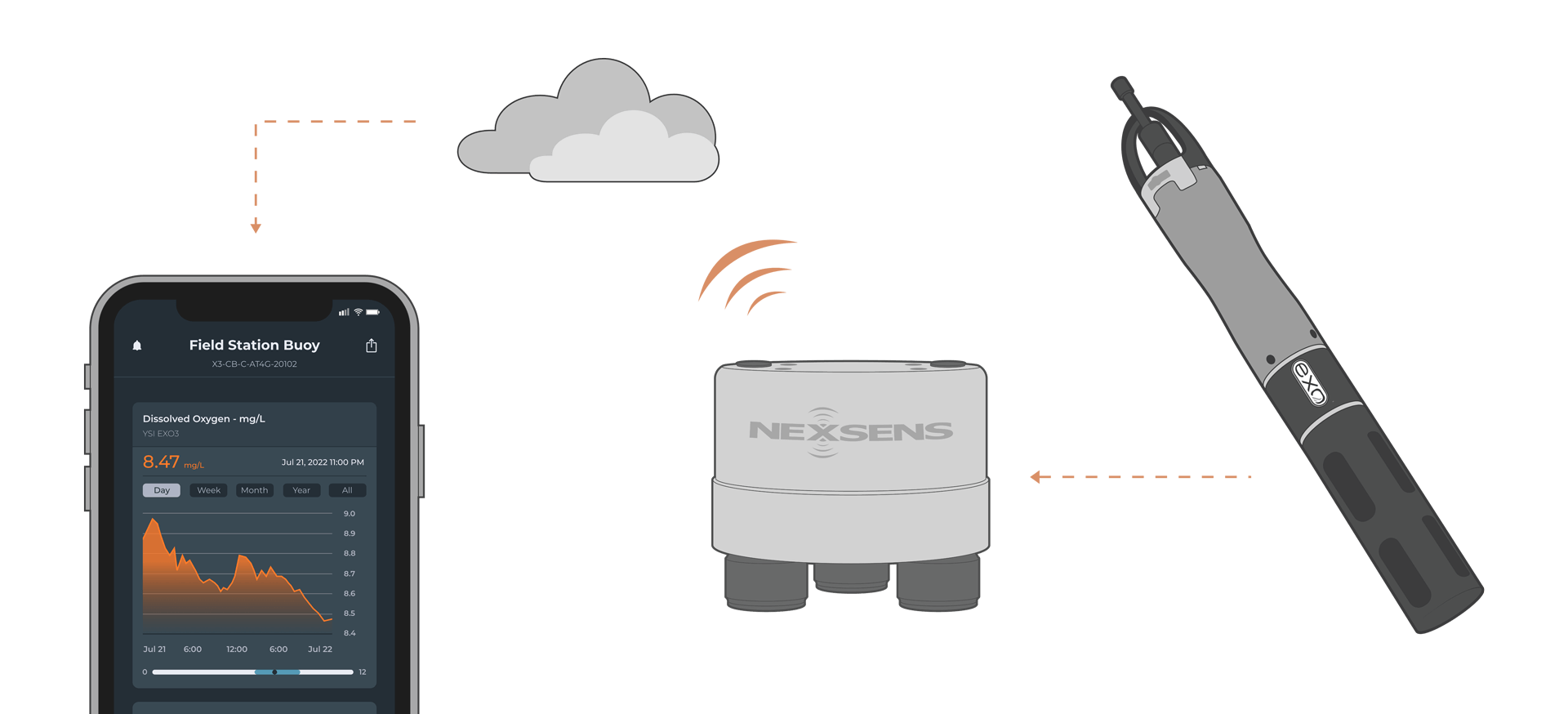
The YSI EXO Multiparameter Sondes can simultaneously measure multiple water quality parameters, including conductivity, temperature, pressure, dissolved oxygen, and many more. It easily integrates with NexSens X-Series data loggers using the SDI-12 sensor interface. Sensor Setup Before the sensor can be deployed, it must first be set up through KOR software. For proper communication with […]
Read More →
California Polytechnic State University, San Luis Obispo
Monitoring efforts in Morro Bay have been ongoing for decades, studying the inputs of the bay’s tributaries, the outputs of the bay, and water quality conditions over time. For the past 18 years, California Polytechnic State University, San Luis Obispo (Cal Poly, SLO) has managed various monitoring stations in the bay and estuary. The project […]
Read More →
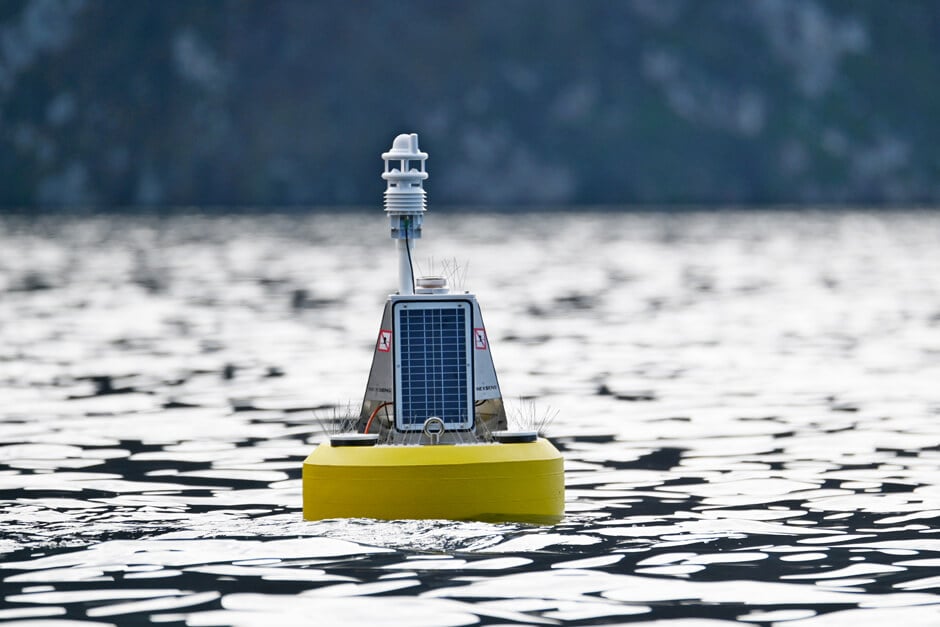
Lake Lugano (Ceresio) and Lake Maggiore (Verbano) comprise a significant portion of territory in Ticino, located in southern Switzerland. They are crucial to the region’s biodiversity, society, and economy. In addition to being important for ecological and tourism purposes, the lakes provide drinking water for a significant portion of the population. Recognizing the lack of […]
Read More →
U.S. Army Corps of Engineers’ Huntington District
The U.S. Army Corps of Engineers’ Huntington District (LRH) oversees various water quality and sediment monitoring programs across Kentucky, Ohio, Virginia, and West Virginia. The LRH covers approximately 45,000 square miles of drainage area, with nine river basins flowing into a 311-mile stretch of the Ohio River. The LRH monitors 35 flood control projects in […]
Read More →
Oxidation-Reduction Potential (ORP), also known as Redox Potential, is a measure of water’s ability to facilitate chemical processes that either oxidize or reduce substances within it. It indicates the presence and activity of agents that can accept or donate electrons. ORP is measured in terms of electric potential with standard units of millivolts (mV). Readings […]
Read More →
pH has a complex role in water chemistry as it influences the solubility, reactivity, and potential toxicity of a wide range of elements commonly found in water.
Read More →
Turbidity is the state of relative clarity or cloudiness of water. Many factors can contribute to increased turbidity. The most obvious are suspended sediments consisting of various sand, silt, clay and gravel particles. These may be introduced by soil erosion, urban runoff, bottom-dwelling aquatic creatures that stir up settled sediments, or human activities such as […]
Read More →
Dissolved oxygen, often abbreviated as DO, is the amount of free oxygen molecules (O2) dissolved in water. Oxygen enters the water through atmospheric diffusion, plant photosynthesis, or aeration (either natural or man-made). DO is typically represented in measurement units as percent of air saturation (%sat) and concentration in milligrams per liter (mg/L) or parts per […]
Read More →
Conductivity, often denoted as EC (electrical conductivity), is a measure of a water sample’s ability to conduct electric current. It is primarily determined by the presence of dissolved salts and other inorganic substances that ionize in water. Such substances are known as electrolytes, and they conduct electricity due to their positive and negative charges. The […]
Read More →
Water temperature is a physical property of water indicating its relative hotness or coldness. More specifically, it is the measure of the thermal energy produced by the vibrations of water molecules. Inputs such as solar radiation increase the kinetic energy of the molecular vibrations, thereby increasing the temperature. The Celsius scale with units of degrees […]
Read More →