
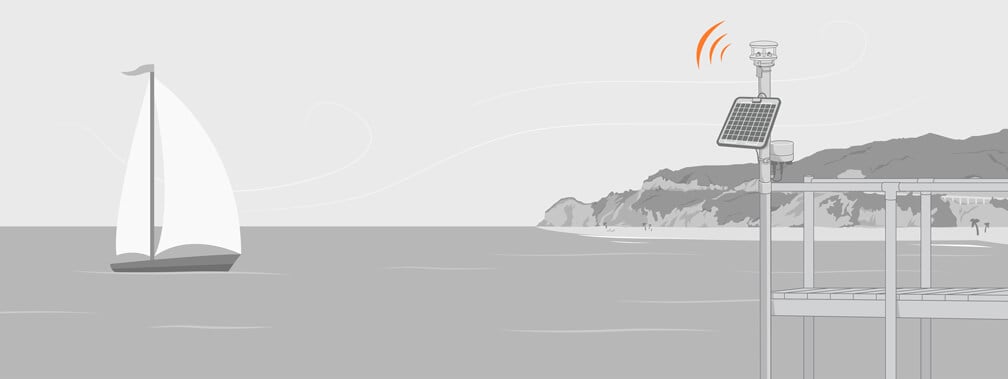
Wind refers to the horizontal movement of air caused by differences in atmospheric pressure. It plays a crucial role in shaping weather patterns, driving ocean currents, and influencing temperature and precipitation around the globe. Understanding wind patterns and their strength is fundamental for meteorology, environmental monitoring, and applications such as aviation and renewable energy.
Wind is generally described by its speed and direction. Wind speed measures the rate of airflow, typically expressed in meters per second (m/s), kilometers per hour (km/h), miles per hour (mph), or knots. Wind direction indicates the origin from which the wind is blowing, commonly measured in degrees or using cardinal points (e.g., north, south, east, west). For example, a “north wind” is a wind coming from the north moving towards the south.
Why Measure Wind Speed and Direction?
Wind measurement is significant in a number of applications related to meteorology and environmental monitoring. Strong winds can present safety hazards and potentially cause destruction. However, they can also be harnessed as a source of renewable energy.
Some of the most common applications for wind measurement include:
- Weather Forecasting: Wind patterns are key indicators of developing weather systems. Strong winds often indicate approaching storm fronts, cyclones, or hurricanes, while shifts in wind direction can signal changes in weather conditions.
- Climate Studies: Understanding long-term, global wind patterns helps in climate modeling and research. Wind influences temperature distribution, evaporation, and precipitation and is a factor in global circulation systems such as jet streams.
- Marine Monitoring: Wind measurement has been significant for efficiency and safety throughout the history of marine navigation. Today, wind is frequently combined with wave and current measurements to provide general sea state monitoring.
- Aviation Safety: As with marine navigation, aviation depends on wind data for efficiency and safety. Route planning can take advantage of tailwinds, navigate around storm systems, and avoid landing in potentially hazardous crosswinds.
- Renewable Energy: Understanding wind patterns can help to determine suitable locations for wind farms. Once established, turbines operate most efficiently at certain wind speeds and angles, so accurate wind data helps to optimize energy output.
- Agriculture and Forestry: Wind affects plant growth and plays a role in the distribution of seeds, pollen, and other biological materials. It also influences evapotranspiration rates, which are important for irrigation planning.
- Air Quality: Wind disperses pollutants and airborne particles, impacting local and regional air quality. Measuring wind speed and direction helps environmental scientists understand the movement of pollutants and forecast air quality conditions.
How Are Wind Speed and Direction Measured?
Instruments for the measurement of wind speed and direction are called anemometers. Although many types of anemometers exist, mechanical and ultrasonic anemometers are the most common for environmental applications.
The mechanical category includes both cup and vane anemometers. Cup anemometers are characterized by a series of hemispherical cups attached to horizontal arms, which rotate around a vertical axis at a rate proportional to the wind speed. Early instruments usually had a 4-cup design, but 3-cup designs are more common today. They are popular for their simplicity, durability, and ease of use but measure only wind speed unless the design includes a directional component.

Vane anemometers include a vane that aligns with the wind to indicate direction. Wind speed is measured with a cup mechanism or propeller. Combining these elements provides both wind speed and direction data in a single instrument.

The movement of the mechanical components in cup and vane anemometers produces an analog electrical output such as a 4-20 mA or voltage signal that can be read by a data logger or converted to a digital format by a secondary analog-to-digital converter device.
In contrast, ultrasonic anemometers use sound waves rather than moving parts to measure both wind speed and direction. Ultrasonic pulses are passed between multiple transducers arranged in a geometric pattern. A minimum of three transducers are required, though some designs include four or more transducers. The wind alters the time it takes for sound to travel between them (the time of flight or “TOF”), allowing the device to calculate both wind speed and direction.
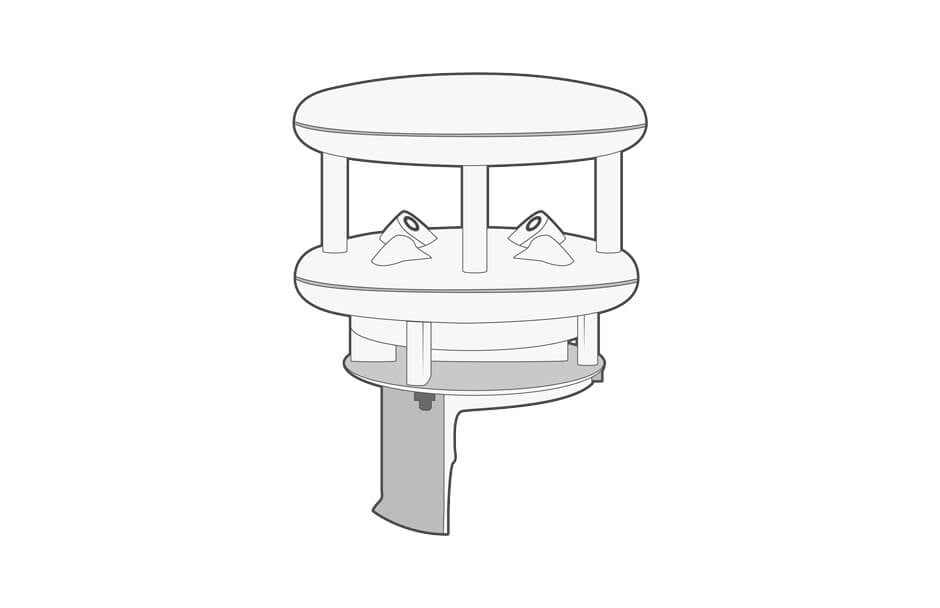
Ultrasonic anemometers typically output data in digital formats such as SDI-12, Modbus, ASCII, or NMEA 0183, though some offer analog output options as well.
For advanced wind profiling, Light Detection and Ranging (LiDAR) and Sound Detection and Ranging (SODAR) technologies are sometimes implemented. LiDAR measures wind by analyzing the reflection of laser light from airborne particles, while SODAR uses sound waves to determine wind speed and direction at different altitudes. These technologies can be particularly relevant for renewable wind energy generation and meteorological studies.
How to Select an Anemometer?
Application type, accuracy requirements, and environmental conditions are the primary factors to consider when selecting a wind measurement system.
For general purpose meteorological observation, most mechanical and ultrasonic anemometers are suitable. However, certain factors such as WMO accuracy requirements (from the World Meteorological Organization) may dictate which type is appropriate for specific uses.
For deployments in areas subject to subfreezing conditions, the anemometer should be equipped with heating to prevent ice buildup. Ice can interfere with both the movement of the mechanical parts of cup and vane devices and the sound pulses of ultrasonic anemometers.
Besides freezing and ice, other environmental factors like wind strength and dust may affect sensor selection. The measurement range should be suitable for the most extreme conditions the anemometer is expected to experience. Ultrasonic instruments may fare better than mechanical components in dusty environments, although they still may require regular cleaning to maintain their accuracy.
What to Consider When Preparing an Anemometer?
Calibration is critical for achieving accurate wind measurements. Regular calibration ensures that the instrument remains accurate over time in long-term monitoring projects.
Wind direction measurement accuracy requires that sensors are properly aligned in stationary (land-based) applications. Wind sensors are typically marked with a north arrow or similar directional indicator for alignment.
An internal compass may also be used for automatic correction regardless of orientation. In moving applications such as on ships or data buoy platforms, compass correction is essential for wind direction measurement.
How to Deploy a Wind Measurement System?
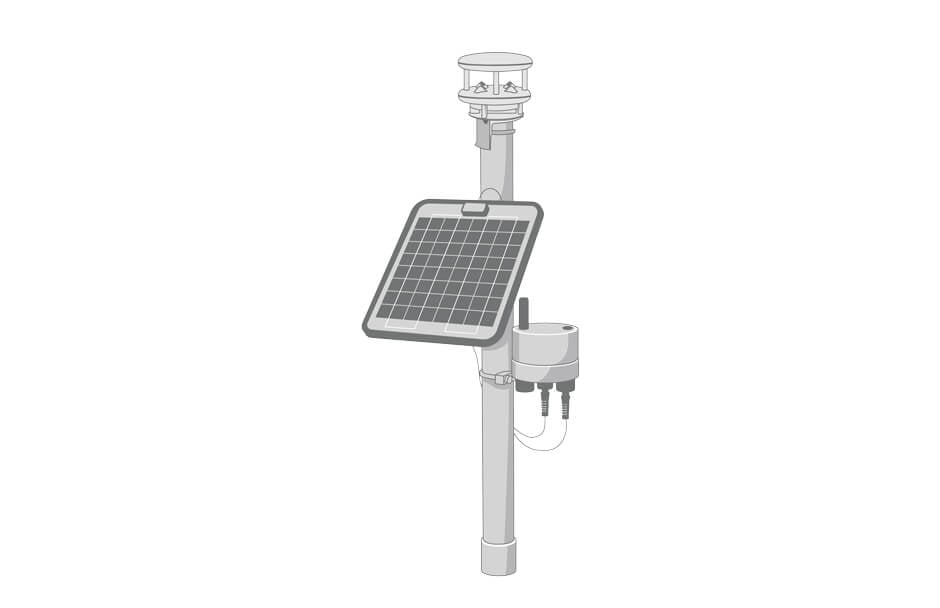
Wind sensors, whether mechanical or ultrasonic, must be deployed in open areas free of obstructions such as trees, buildings, or tall structures. The WMO and other meteorological organizations recommend specific mounting heights for anemometers, often around 10 meters above ground level, to capture wind patterns representative of the broader environment rather than local obstructions.
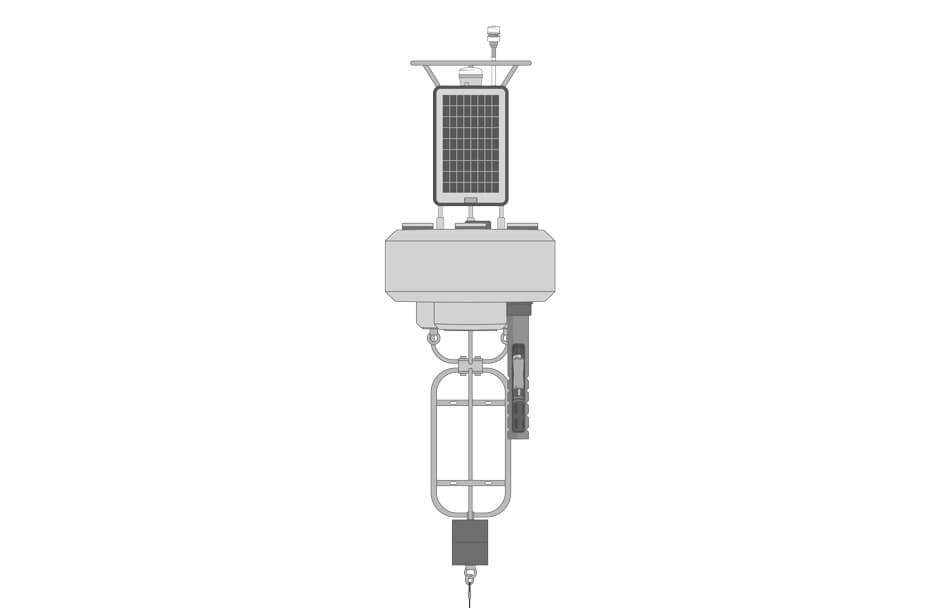
In certain marine or buoy applications, anemometers should be mounted on buoy towers or masts to ensure they are elevated above the water and can capture unimpeded wind data.
When installing the sensor, align it properly for directional measurements. Since the true north pole and magnetic north pole are not precisely the same, also consider whether the instrument is reporting direction relative to true or magnetic north.
Magnetic declination is minimal in some parts of the world but can introduce a significant error in other regions, particularly in areas near the magnetic poles. Use a reference chart to determine the local declination at the monitoring site and use it to decide the sensor’s orientation (or internal programming for instruments with compass).
Measurement sites should be periodically visited to perform maintenance on anemometers. This may include cleaning, bearing replacement, recalibration, and/or adjustment of the magnetic declination since the magnetic poles shift slightly over time.
Conclusion
Wind measurement is a critical part of understanding atmospheric behavior and predicting weather patterns. It is interrelated with other meteorological phenomena as it is caused by barometric pressure gradients, which in turn develop from temperature differences. Winds affect daily operations in areas such as aviation, marine transportation, and renewable energy generation.
Anemometers are instruments for wind measurement and include both mechanical and ultrasonic designs. Instrument selection based on environmental conditions, combined with proper installation and maintenance, allows for obtaining reliable wind data in both terrestrial and buoy-based applications.
Additional Resources

