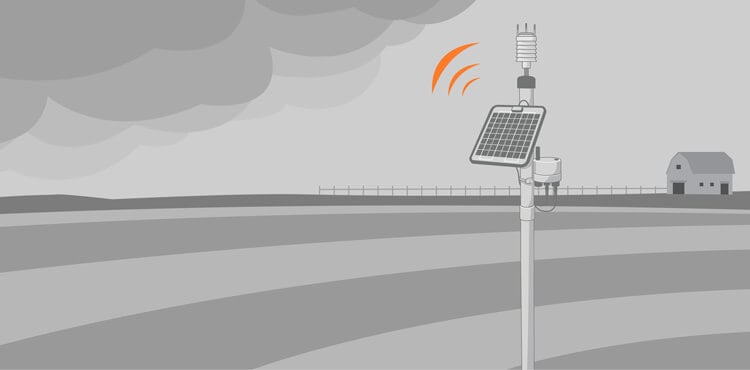
An illustration of a real-time humidity monitoring station in a agricultural field.

    5.4 Relative Humidity

    Relative humidity is a measure of the moisture content of air relative to the maximum amount of moisture the air can hold at a given temperature. It is expressed as a percentage, where 100% relative humidity indicates that the air is fully saturated with moisture and cannot hold any more at its current temperature and […]
    Read More

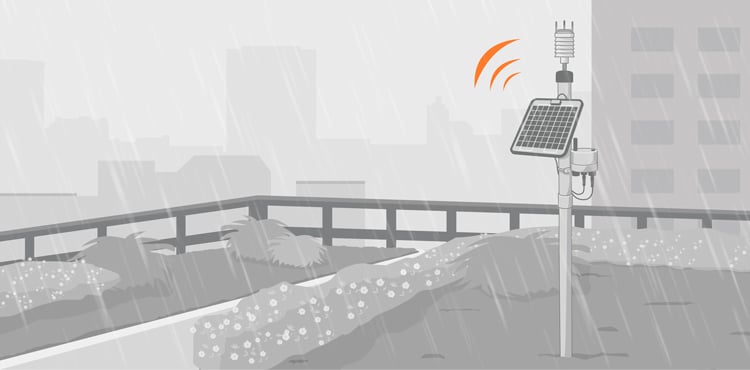
    5.3 Precipitation

    Precipitation refers to any form of water–liquid or solid–that falls from the atmosphere and reaches the ground. Rain, snow, sleet, freezing rain, graupel, hail, and drizzle are all various forms of precipitation, depending on droplet size and temperature conditions. Fog and dew are not considered precipitation because they are condensation processes rather than falling water.  […]

    Read More
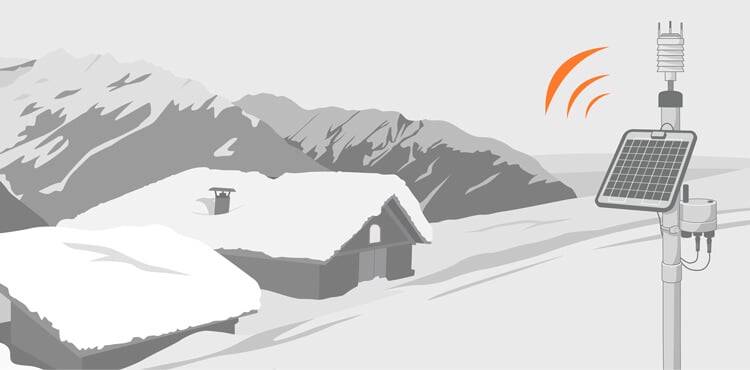
    Illustration of a pole-mount systems on a snowy mountain. The system is equipped with a barometric pressure sensor and NexSens X3 data logger.

    5.2 Barometric Pressure

    Barometric pressure, also known as atmospheric pressure, refers to the pressure exerted by the air layers that make up the Earth’s atmosphere. Heavy, dense pockets of air result in relatively higher pressure, while the rising of warm, surface-level air causes lower pressure. Atmospheric pressure affects the weather as high and low-pressure systems move around the […]

    Read More
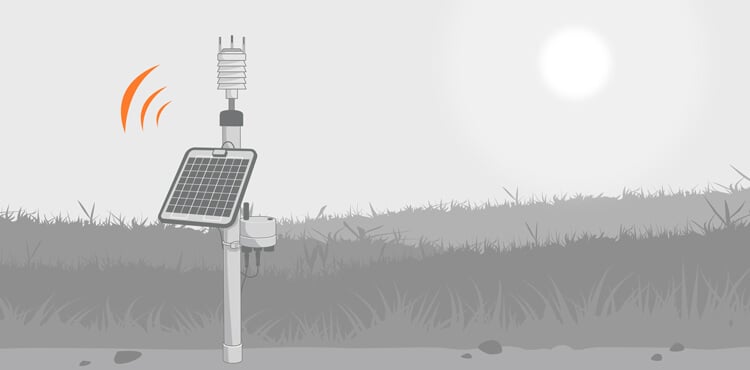
    Illustration of a pole-mount station in a field measuring air temperature. Mounted on the pole is a NexSens X3 data logger, solar panel, and weather station.

    5.1 Air temperature

    As outlined in the chapter on water temperature, temperature is a physical property indicating relative hotness or coldness. In the context of meteorology, it is the measure of the thermal energy in the atmosphere that comes from molecular vibrations of air, which primarily consists of nitrogen, oxygen, and argon molecules, as well as trace amounts […]

    Read More
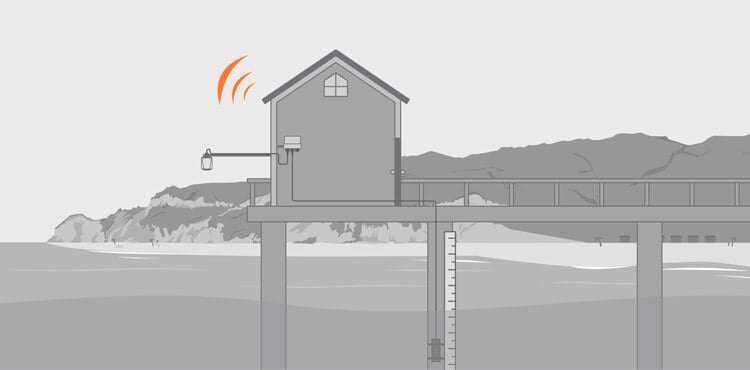
    Illustration of a gauge house monitoring the tide on a dock

    4.5 Tide

      Tides are the regular rise and fall of sea levels caused by the gravitational pull of the moon (and, to a lesser degree, the sun) on Earth’s oceans and seas. They are characterized by the difference between the highest and lowest points, known as tidal range. There are two main types of tides: diurnal […]

    Read More
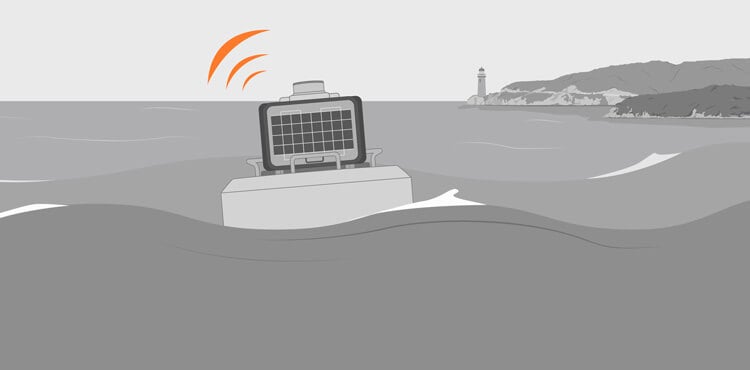
    Illustration of a NexSens wave data buoy deployed off of a coast

    4.4 Waves

    Waves are periodic ridges or swells on the surface of bodies of water caused by energy passing through the water. Energy transfer from wind is the driving force behind most common surface gravity waves throughout the globe.  As air passes over the water, the friction at the air-water interface produces localized wave crests. Unimpeded wave […]

    Read More
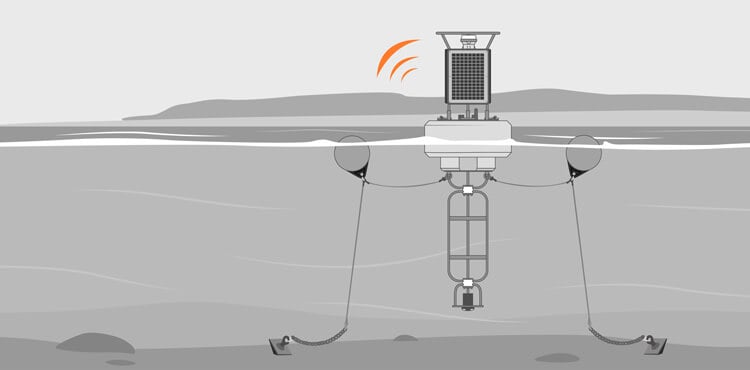
    Illustration depicting a currents monitoring buoy-based system

    4.3 Currents

    Current, in terms of hydrology, refers to the movement of water that takes place in all natural surface waters, including streams, rivers, lakes, coastal waters, and oceans. Various factors influence water currents, such as wind patterns, temperature and salinity differences, the Earth’s rotation (Coriolis effect), the gravitational pull of the moon, the physical topography of […]

    Read More
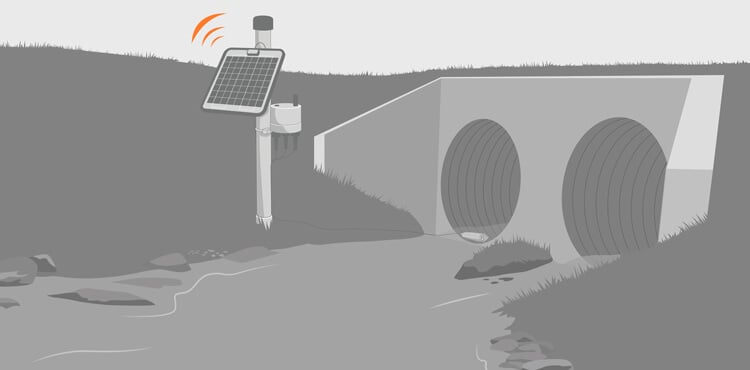
    illustration depicting a real-time flow monitoring system near a culvert

    4.2 Flow

    Water flow measurement builds on level measurement to provide not only water levels, but total volume in moving natural waterways, namely rivers and streams. Flow monitoring tracks the movement of water in a watershed and is a critical component of water resource management, hydropower generation, environmental conservation, and other hydrological studies. Flow rates in water […]

    Read More
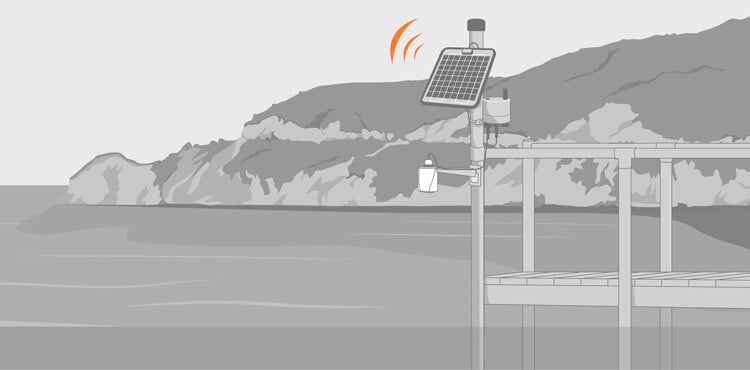
    Illustration of a dock monitoring system that is measuring water level.

    4.1 Water level

    Water level measurement is a fundamental aspect of water resource management and environmental monitoring in aquatic ecosystems. Monitoring the water level in natural waters such as lakes, rivers, reservoirs, oceans, groundwater, and other water bodies is essential to researchers, resource managers, infrastructure planners, port authorities, and other environmental professionals. Climate change concerns have also amplified […]

    Read More
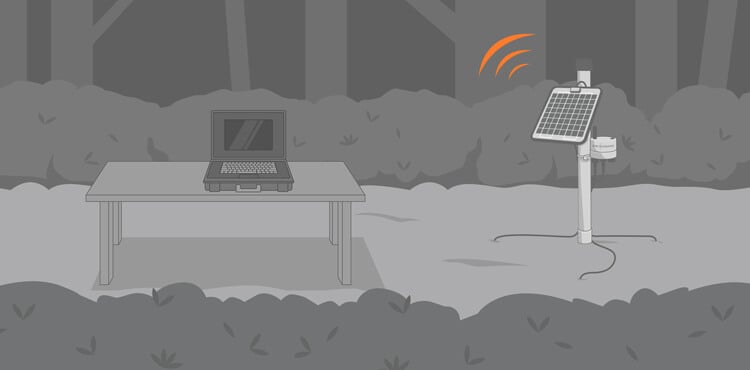
    Illustration of a field computer data display in a forest next to a real-time soil monitoring station.

    2.7 Field Computers, Displays, and Mobile Apps

    While data loggers, sensors, and cloud datacenters make up the backbone of environmental measurement systems for continuous monitoring, various other displays are commonly used both during fieldwork and normal operation. Field computers, handheld display units, and mobile devices like smartphones are used both for real-time data collection and configuration of permanent installations. On-site displays are […]

    Read More