
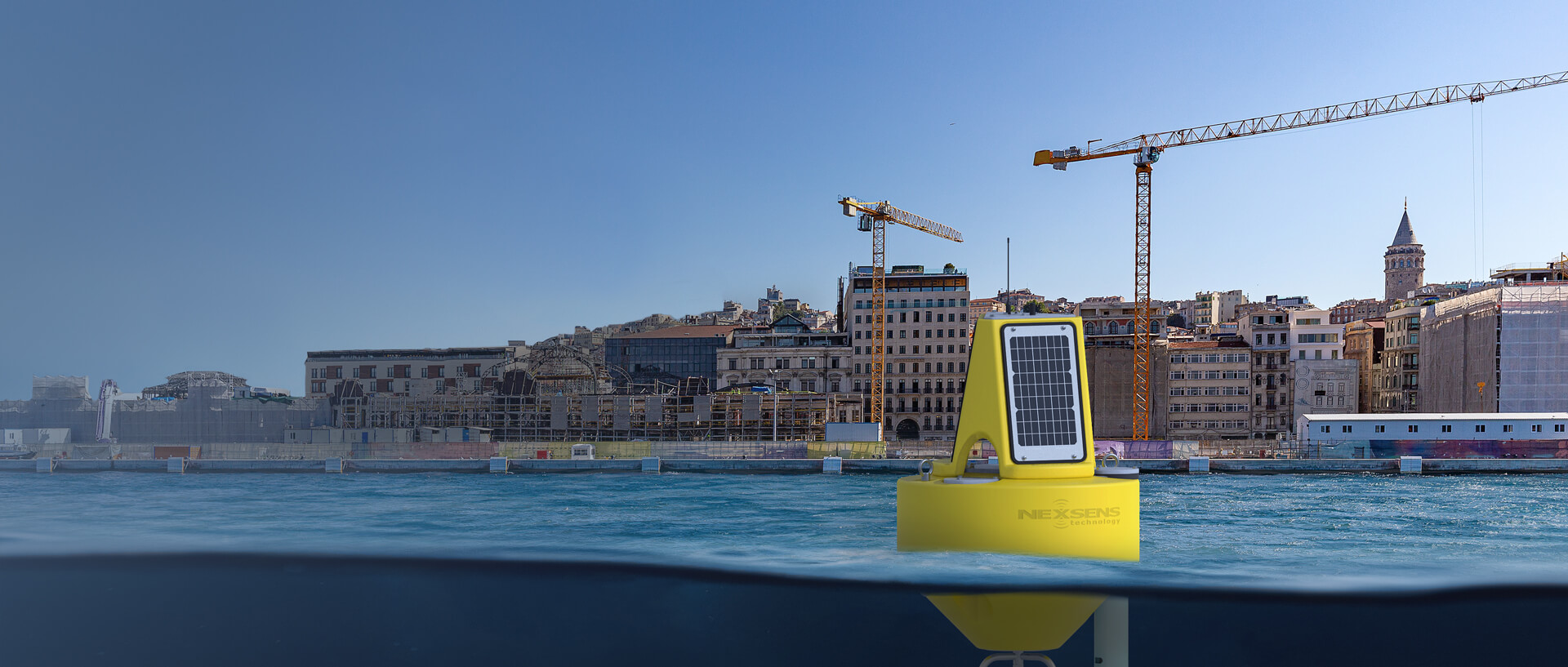

Recommended Construction Turbidity Monitoring System
Construction and other similar turbidity applications demand reliable data and robust equipment to both avoid unnecessary work stoppages and protect the environment. Buoy-based systems provide the flexibility and reliability required.
Buoy
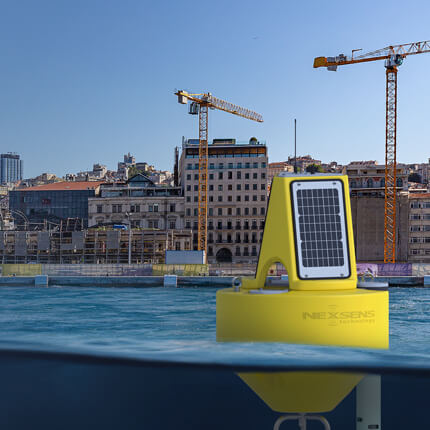
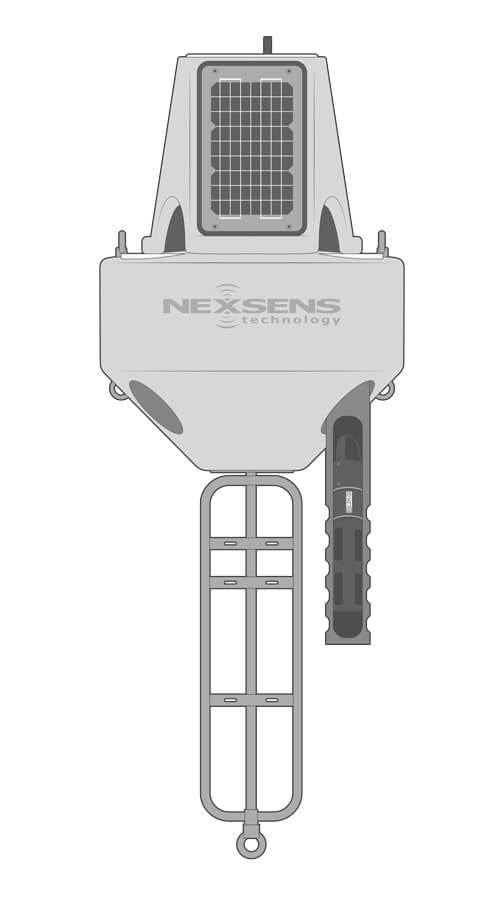
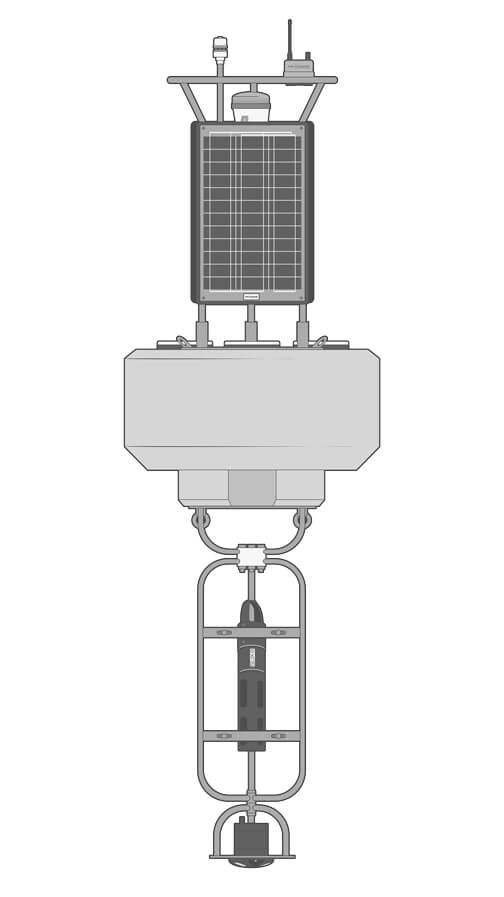
The XB-200 buoy is a compact yet robust platform that facilitates open-water monitoring in both freshwater and marine environments. Weighing just under 70 lb. (30 kg), it is easy to set up and deploy even from small vessels.
Data Logger
The X3 data logger conveniently mounts to the solar tower of the XB-200 and provides pluggable, waterproof sensor ports for simple connection of turbidity instruments. Real-time data is acquired from nearly any location via Wi-Fi, 4G LTE, or Iridium satellite telemetry.
Turbidity Sensors
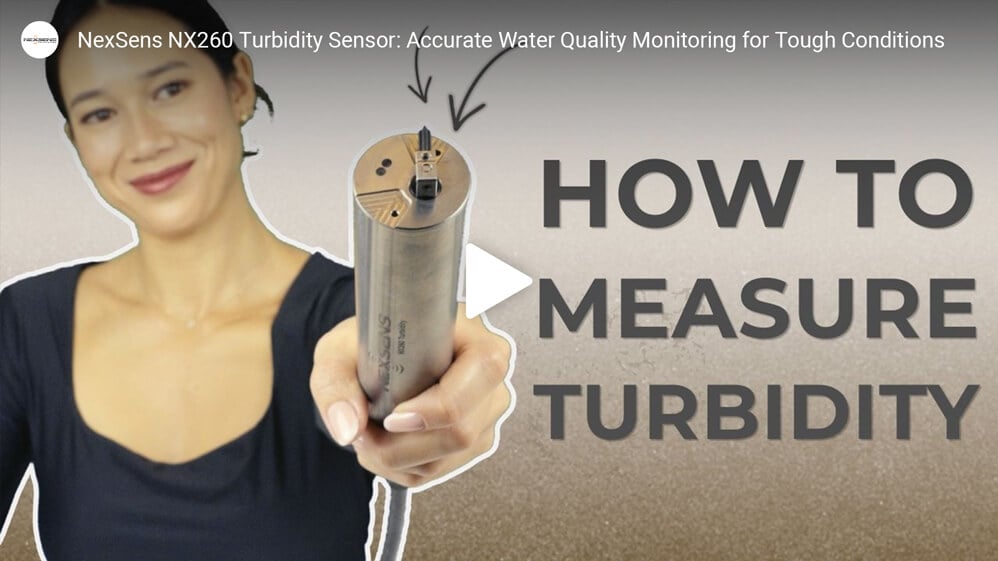
The X3 logger is compatible with nearly all industry-standard turbidity sensors using common communication protocols. Instruments like the NexSens NX260 and YSI EXO3s extend deployments and increase measurement reliability with self-cleaning wiper mechanisms.
Power
The XB-200 data buoy provides three 15W solar panels oriented to capture sunlight from any direction. Coupled with a battery capacity of up to 56 A-hr, continuous operation with high-frequency data acquisition is possible in most geographic locations.
Accessories
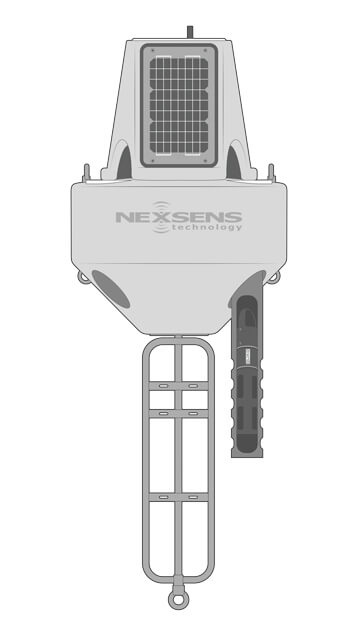
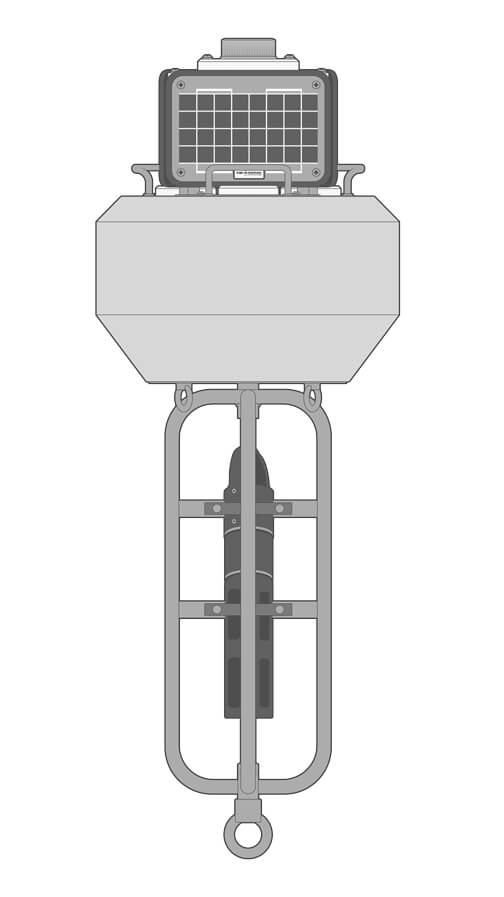
Perforated deployment pipe accessories are commonly used for simple deployment of near-surface sensors with topside access for maintenance without buoy removal. For deeper or multi-sensor configurations, sensor strings are suspended from the buoy hull or cage.
Need More?
NexSens monitoring systems offer a solution for nearly any shoreside construction or mining project. Plug-and-play systems are available in a range of sizes and support many different sensor types for applications requiring additional measurements.
Alternate Buoy Sizes
For relatively short-term projects where physical size and buoyancy are not critical factors, the CB-75 is a smaller and more cost-effective buoy alternative. Logger electronics support the same turbidity sensor types as any larger buoy system.
Larger platforms, including the CB-650 and CB-950, are also available for sites with heavy boat and ship traffic that require increased visibility, or for applications requiring advanced instrumentation with a higher power demand.
Additional Sensors
Common sensor types used to augment construction turbidity buoys include weather stations, water quality sensors, and current profilers. Tower-mounted meteorological instruments provide local weather data that can be useful to construction operators.
In applications requiring more thorough water quality monitoring beyond just turbidity, other water quality sensor types can be integrated to measure parameters including temperature, pH, dissolved oxygen, and nutrient concentrations.
For advanced tracking of turbidity releases and the safety of work conditions on sites such as rivers, ADCP current profilers may be integrated. These advanced instruments provide multi-depth current speed and direction measurements.
Deployment
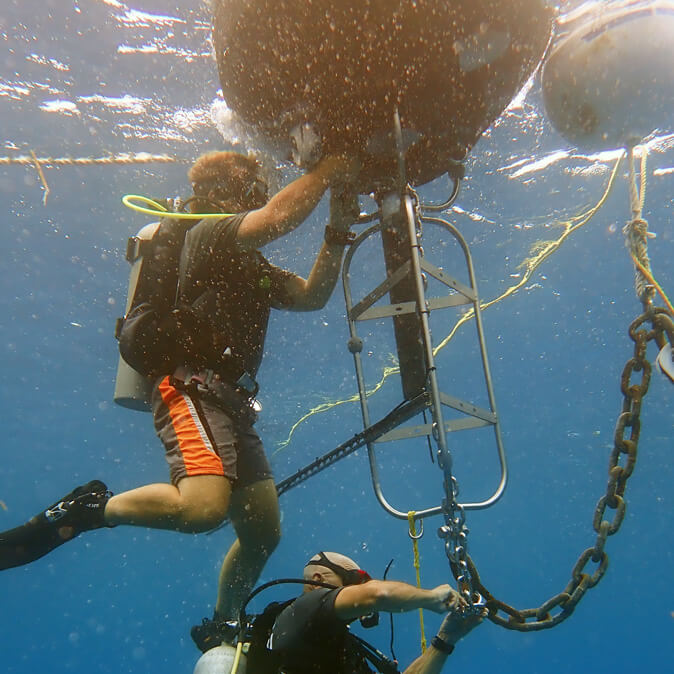
Construction monitoring buoys can be deployed with either single-point or two-point mooring configurations. Calm, shallow-water sites with buoy-mounted sensors work well with single-point moorings, while two-point moorings are ideal for suspended sensor strings.
Shoreside deployments from riverbanks, piers, or docks are also possible as an alternative to buoy-based monitoring. The PM2 Mounting Kit secures the X3 logger to a pole, wall, or other structure with power input from a SP-series solar power pack.
Real-Time Construction Turbidity Data
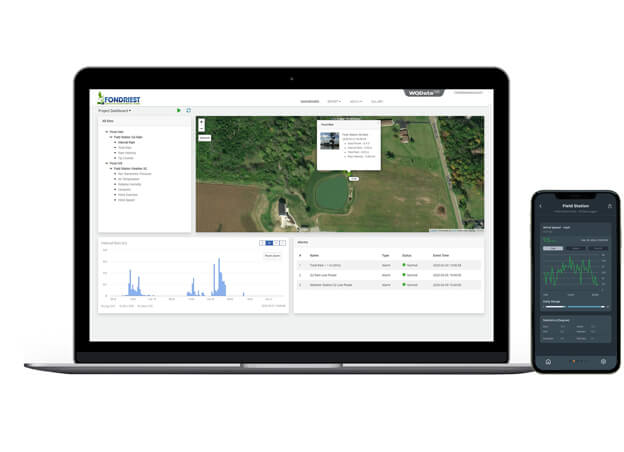
Near real-time turbidity measurements are sent to the WQData LIVE web datacenter via wireless telemetry for continuous monitoring during construction.
Using the free Basic tier service option, users can configure simple high/low Quick Alert notifications for early warning of turbidity exceedances. Additional tools support remote data logger configuration and data analysis, sharing and downloading.
Subscription-based WQData LIVE tiers offer advanced alarms based on multi-trigger conditions or consecutive turbidity readings over threshold values. Automated export, API, or Public Portal data sharing options are also available.

Purchase in the USA
Visit our US distributor, Fondriest Environmental, to purchase online.

Purchase Internationally
Click the button below to find a local distributor.
Contact a NexSens Applications Scientist
Need help designing an Environmental IoT system? NexSens applications scientists will help you design the perfect monitoring system to meet field conditions and monitoring needs.
Related Videos

Case Studies

Monitoring Currents in the Patapsco River After Francis Scott Key Bridge Collapse
When the Francis Scott Key Bridge collapsed on March 26, 2024, NOAA was one of the first groups contacted as the city of Baltimore sought to minimize impacts to transport on the Patapsco River. As salvage efforts progressed in early April, real-time tidal currents data became necessary to help ensure safe navigation through the collapse site and to inform cleanup efforts. In response, NOAA’s Center for Operational Oceanographic Products and Services (CO-OPS) deployed a current monitoring buoy—CURBY (Currents Real-time BuoY)—north of the bridge. Challenges: Deploying an Effective Current Monitoring System Under Emergency Conditions

Water Quality and Sediment Monitoring in the Huntington District
The U.S. Army Corps of Engineers’ Huntington District (LRH) oversees various water quality and sediment monitoring programs across Kentucky, Ohio, Virginia, and West Virginia. The LRH covers approximately 45,000 square miles of drainage area, with nine river basins flowing into a 311-mile stretch of the Ohio River. The LRH monitors 35 flood control projects in this area—31 lake projects and 4 dry dams. Challenges: Continuous Water Quality Monitoring in Various Applications With the large region to monitor and multiple ongoing projects, the LRH has the challenge of managing a large amount of water. For the last nine years, Thaddaeus Tuggle has been one of many water quality team members tasked with maintaining the LRH’s monitoring equipment and overseeing the various projects LRH manages. The flood projects LRH runs all share four common goals that protect the ecosystem and surrounding populations:
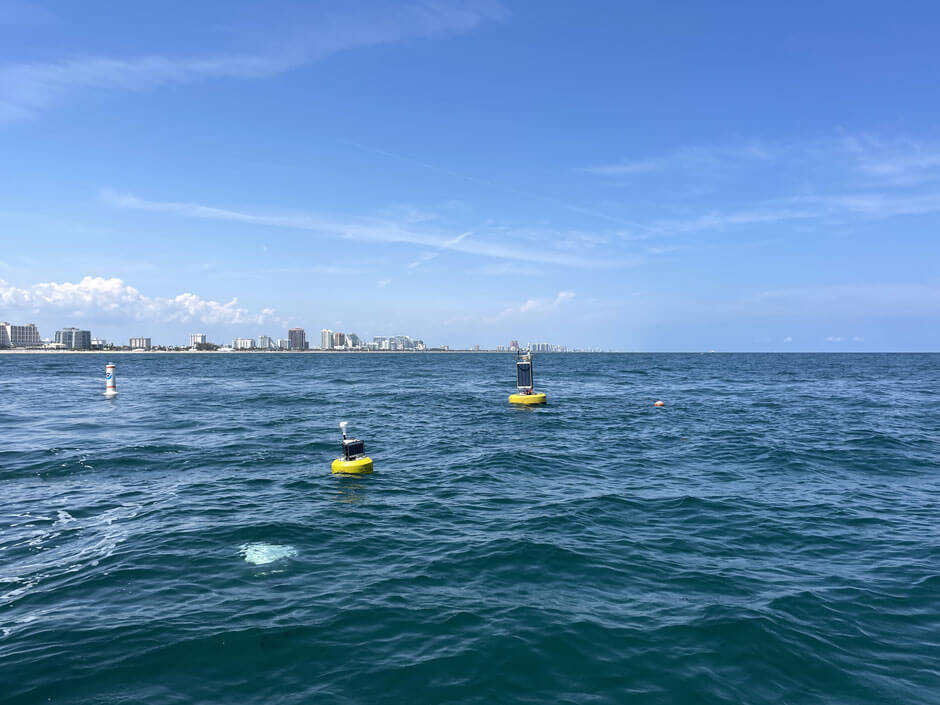
Sediment Monitoring in Port Everglades
To meet the demands of new large marine vessels, the Port Everglades in Florida needs to expand. The US Army Corps of Engineers is leading expansion efforts in the port with dredging planned to start in 2026 to deepen and widen the port to accommodate larger Panamax cargo ships and modern cruise liners. Challenges: Mitigating Environmental Impacts of Dredging The dredging project will displace a large amount of sediment into the water column, which could settle outside of the project area, burying benthic organisms like corals, and possibly carrying harmful particulates to other regions of the world. Dr. Enrique Montes, Associate Scientist of the University of Miami Cooperative Institute for Marine and Atmospheric Studies (CIMAS) affiliated to NOAA’s Atlantic Oceanographic and Meteorological Laboratory (AOML), is overseeing sediment monitoring off the channel of the Port.