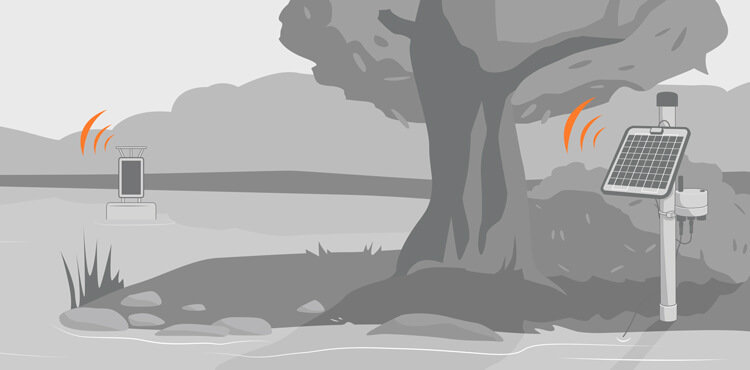
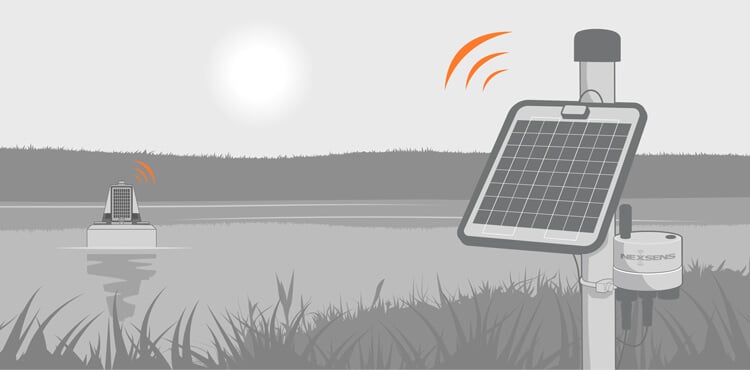
Illustration of a buoy and land based NexSens system in a wetlands. Both systems are equipped with solar panels.

2.5 Power and Solar Charging

With remote monitoring also comes the need for an autonomous, efficient power supply to ensure the continuous operation of sensors, data loggers, and telemetry equipment. Systems installed at or near existing infrastructure can receive power from the electrical grid.  However, fixed power supplies are not available in many applications, so alternative means are required. In […]
Read More
Illustration of a buoy-based radio telemetry system deployed near a beach

2.4 Telemetry

Telemetry refers to the automatic measurement and wireless transmission of data from remote sensors to centralized data collection and management systems. Such technology is crucial for environmental monitoring, particularly in remote locations where real-time data is essential to meet regulatory requirements or to provide quick notice of environmental conditions. Telemetry systems can use various communication […]

Read More
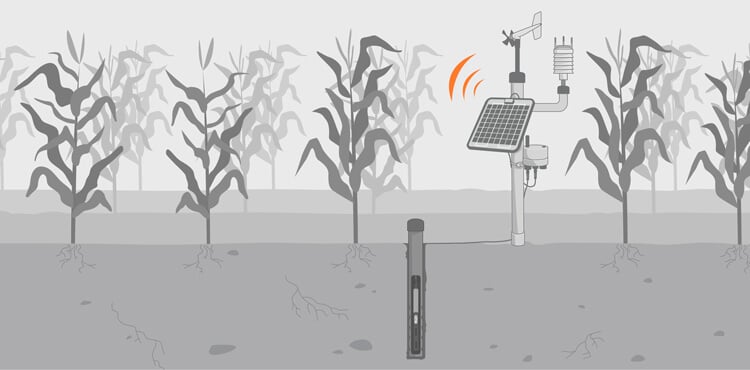
Illustration of a groundwater sensing instrument in a corn field

2.2 Smart Sensors

Smart sensors are advanced measurement devices equipped with integrated processing capabilities and other features that enhance their functionality and reliability. While traditional sensors simply convert physical phenomena into electrical signals that can be recorded and processed, smart sensors can preprocess the data to provide instantaneous results. In addition, they frequently include advanced features such as […]

Read More

2.1 Introduction to Data Collection

Environmental data collection is fundamental to scientific research, environmental management, and regulatory compliance. The systematic gathering of information about natural systems helps scientists, engineers, and policymakers make informed decisions to protect ecosystems, manage resources, and understand environmental changes.  Data collection can range from simple, manual measurements to complex, automated systems that continuously monitor various environmental […]

Read More

1.1 Historical Context and Modern Innovations in Environmental Monitoring

This handbook provides a comprehensive guide to modern techniques in measuring the natural environment, including water quality, hydrology, weather, and soil. It focuses on environmental monitoring and data collection, including sensors, remote data acquisition systems, and cloud-based data management. Its aim is to be a practical resource for environmental professionals, researchers, and students to quickly locate […]

Read More
Illustration of a chlorophyll measurement system.

3.7 Chlorophyll and Blue-Green Algae

Chlorophyll is a pigment found in plant cells and some microorganisms, such as algae and cyanobacteria. It gives these organisms their characteristic green color by reflecting the green wavelengths found in sunlight and plays a central role in the process of photosynthesis. There are several different chlorophyll molecule variants that exist. Chlorophyll-a is present in […]

Read More

3.6 ORP

Oxidation-Reduction Potential (ORP), also known as Redox Potential, is a measure of water’s ability to facilitate chemical processes that either oxidize or reduce substances within it. It indicates the presence and activity of agents that can accept or donate electrons. ORP is measured in terms of electric potential with standard units of millivolts (mV). Readings […]

Read More
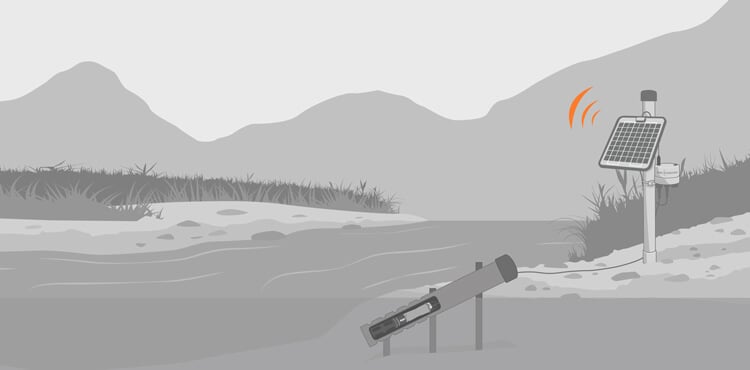
Illustration of a pH monitoring system in a river at the base of a mountain.

3.5 pH

pH has a complex role in water chemistry as it influences the solubility, reactivity, and potential toxicity of a wide range of elements commonly found in water.

Read More
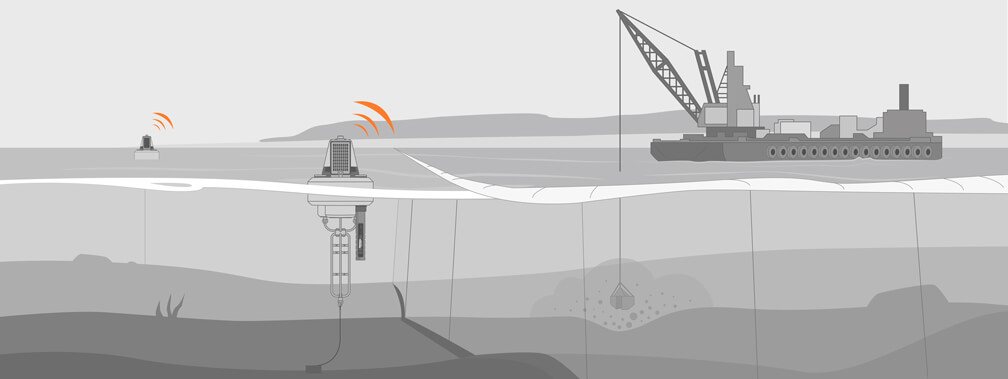
Illustration of two NexSens data buoys monitoring conditions at a dredging site.

3.4 Turbidity

Turbidity is the state of relative clarity or cloudiness of water. Many factors can contribute to increased turbidity. The most obvious are suspended sediments consisting of various sand, silt, clay and gravel particles. These may be introduced by soil erosion, urban runoff, bottom-dwelling aquatic creatures that stir up settled sediments, or human activities such as […]

Read More

3.3 Dissolved Oxygen

Dissolved oxygen, often abbreviated as DO, is the amount of free oxygen molecules (O2) dissolved in water. Oxygen enters the water through atmospheric diffusion, plant photosynthesis, or aeration (either natural or man-made). DO is typically represented in measurement units as percent of air saturation (%sat) and concentration in milligrams per liter (mg/L) or parts per […]

Read More