
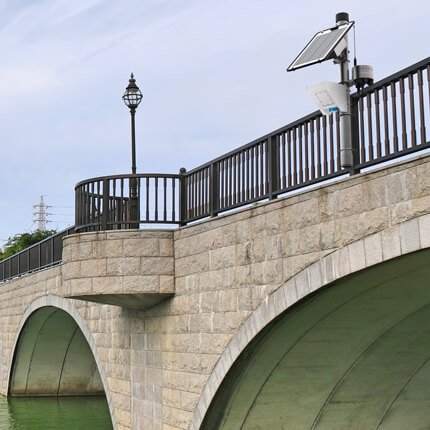

Recommended Flow Measurement System
Stream and river flow measurement typically begins with a site survey to determine the cross-sectional area of the waterway and a suitable location for mounting fixed sensor systems for long-term, continuous measurement.
Data Logger
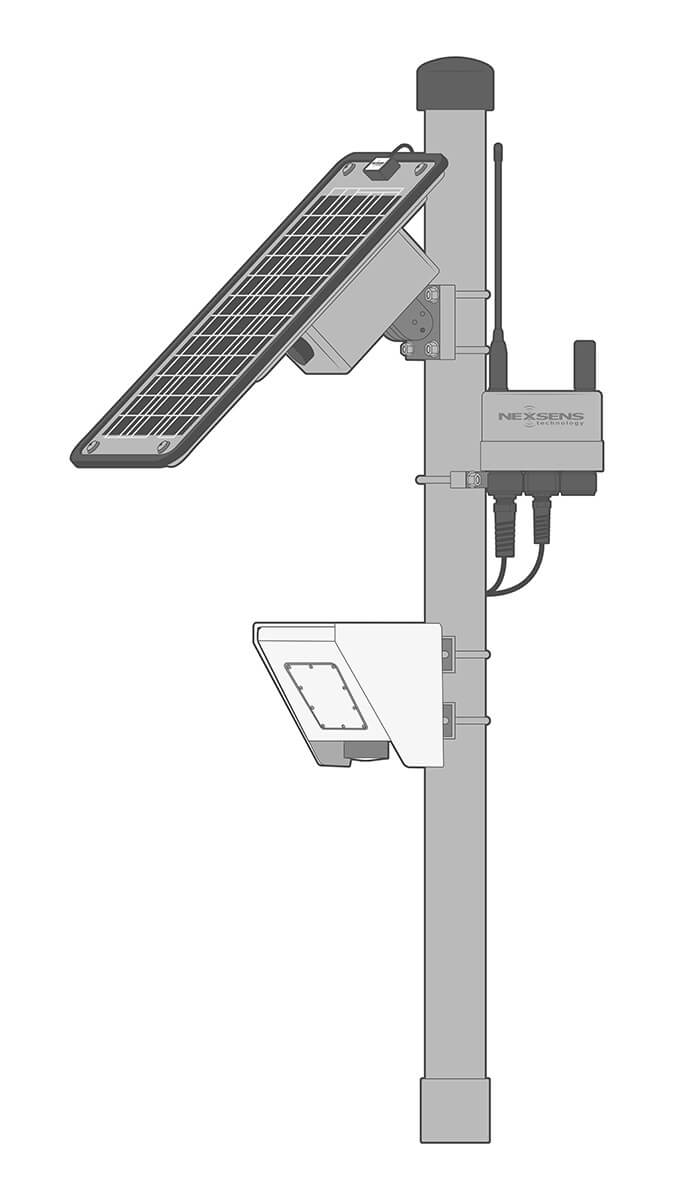
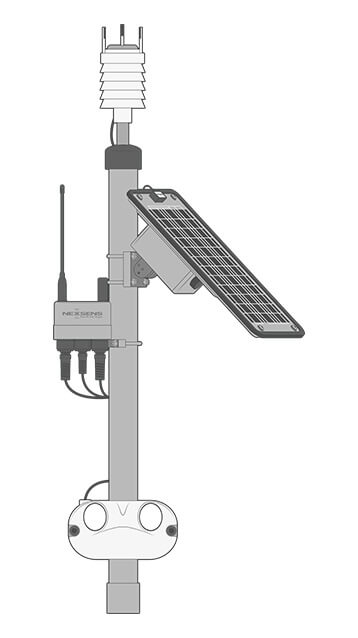
The X3 data logger provides reliable performance in a robust, weather-resistant enclosure. Pluggable, waterproof ports simplify sensor connections, while wireless telemetry capabilities provide real-time data access from most locations.
Flow Sensor
The Geolux Non-Contact Flow Sensor merges radar surface velocity and level sensors for accurate measurement with minimal maintenance. Flow outputs automatically based on user-supplied inputs of cross-sectional geometry and stream/riverbed composition.
Power
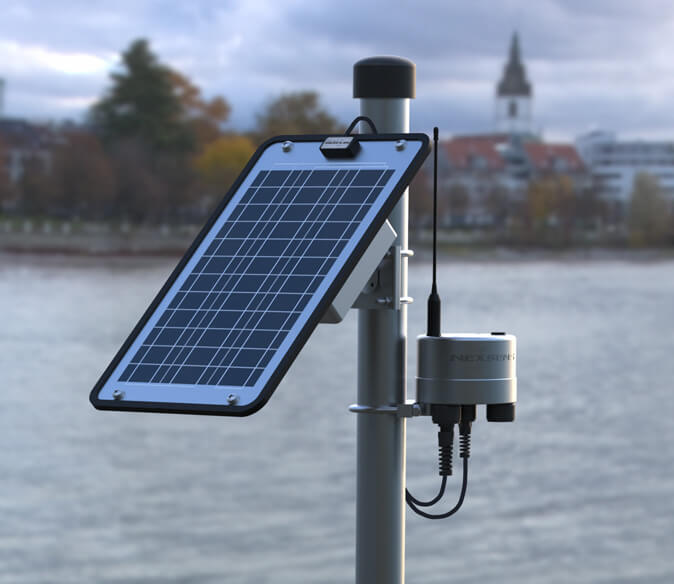
For sites where a fixed power supply is not available or practical, solar-charged SP-series power packs provide a dependable power source. Packs are sized according to sensor load and regional sunlight conditions to maintain continuous operation.


Need More?
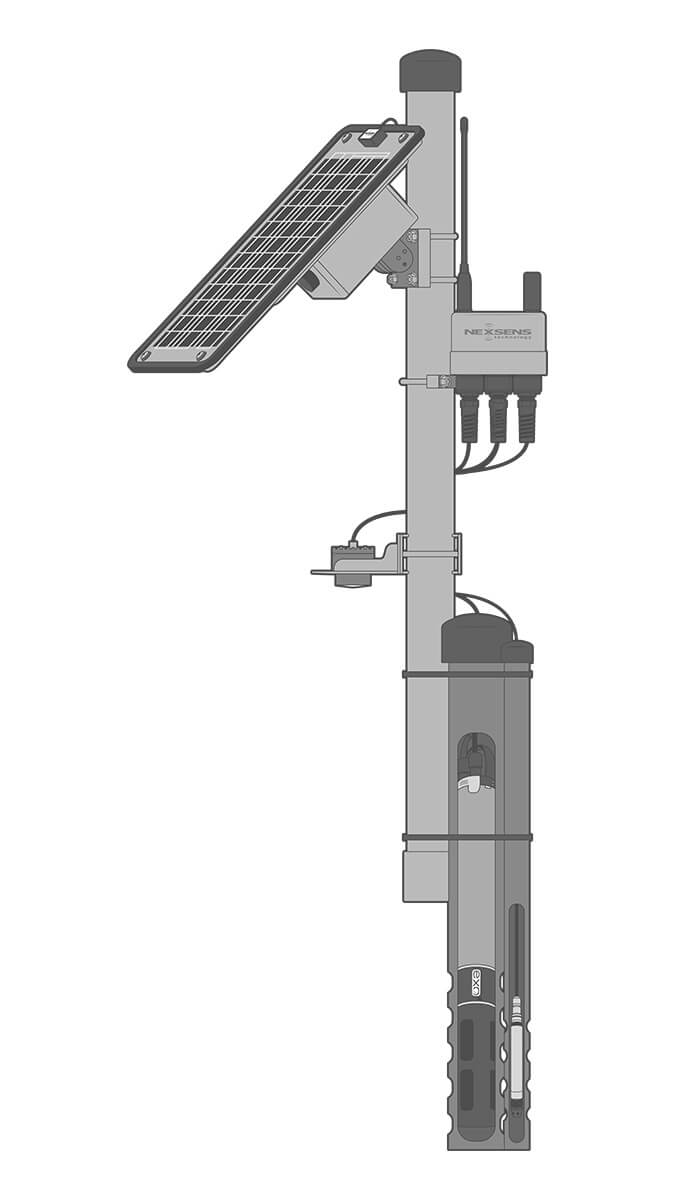
Stream and river flow measurement systems can include many different sensor types to add redundancy or supplementary parameters. The flexibility of NexSens monitoring systems offers the ability to gather comprehensive data sets.
Additional Sensors
Stream and river flow monitoring often benefits from the addition of weather stations or rain gauges to track precipitation and general meteorological conditions like air temperature, pressure, humidity, wind speed and direction, and solar radiation.
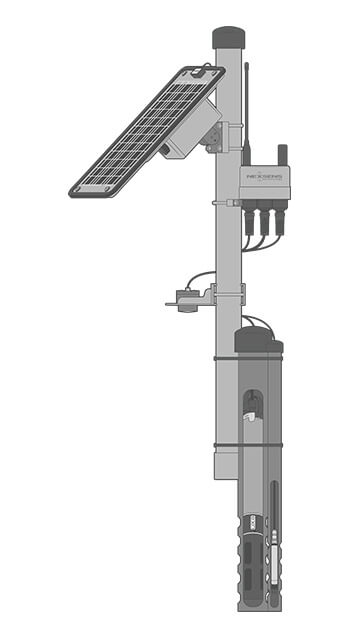
Water quality sensors allow for correlations to be developed between flow conditions and water quality. Multi-parameter sonde configurations deliver common parameters, like water temperature, conductivity, pH, dissolved oxygen, and turbidity in a single instrument.
Site Survey
Performing a site survey to determine the cross-sectional geometry of a waterway is a critical aspect of flow monitoring. For larger streams and rivers, towable Acoustic Doppler Current Profiler (ADCP) instruments are available for enhanced profiling.
Advanced Measurement
Although they require more maintenance and data processing than non-contact radar systems, ADCP instruments can also be used for long-term, continuous monitoring. Both bottom-mounted and side-looking instrument designs are available.
Simplified Measurement
For streamlined, cost-efficient monitoring in waterways surveyed at various depths and flow states, flow rates can be estimated using the stage-discharge method. Although sometimes limited in accuracy, this method requires only simple water level readings.
Water level measurement can be achieved using non-contact radar devices like the Geolux LX-80 series level sensors or submerged pressure transducers such as the Solinst Water Level Temperature Sensor to facilitate monitoring in any environment.
Mounting
The PM2 Data Logger Mounting Kit offers a versatile solution for installing X-Series data loggers. It supports wall mounting with standard fasteners or attachment to 1.5″ to 2″ (38 to 50 mm) diameter poles for installation on bridges, culverts, and other structures.
Included grounding hardware helps safeguard the system from electrical surges. Custom brackets are also available for mounting radar flow sensors, ADCP instruments, weather stations, and any other instruments integrated into a flow monitoring system.
Real-Time Flow Data
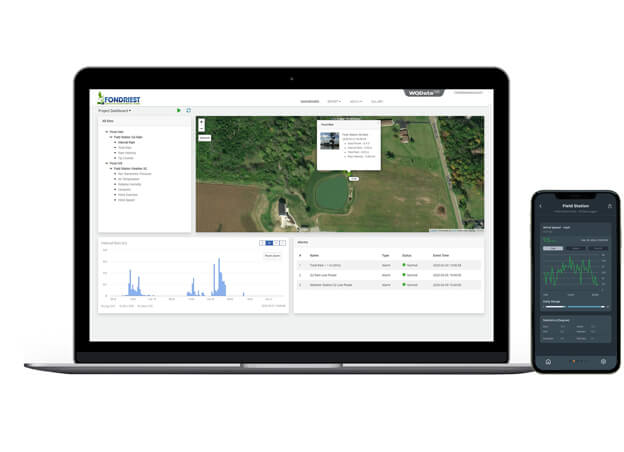
Wireless 4G LTE, Wi-Fi, or Iridium satellite telemetry options deliver near real-time flow data to the WQData LIVE web datacenter.
The free, basic WQData LIVE service provides secure data access with features to analyze data, remotely control loggers, set simple high/low Quick Alerts, and share data through auto-reports.
Subscription-based tiers unlock advanced features, including multi-trigger alarming and data sharing via automated export, API, and Public Portal options.

Purchase in the USA
Visit our US distributor, Fondriest Environmental, to purchase online.

Purchase Internationally
Click the button below to find a local distributor.
Contact a NexSens Applications Scientist
Need help designing an Environmental IoT system? NexSens applications scientists will help you design the perfect monitoring system to meet field conditions and monitoring needs.
Related Videos


Case Studies
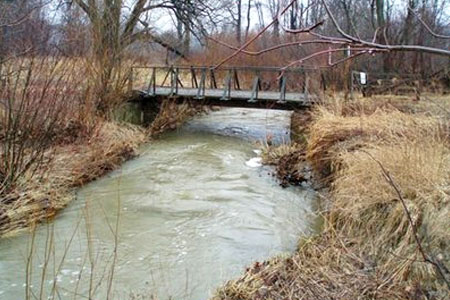
Water Quality and Flow Monitoring
The University of Akron Field Station is located on the 411-acre Bath Nature Preserve in northeastern Ohio. It promotes a better understanding of our relationship with the natural environment through research, education, and service. Students, faculty, and Bath community members have been working for some time to gather long-term, baseline data on water quality, biological diversity, and climate of the preserve. Project administrators have chosen to use the NexSens WQData web datacenter as a solution to help manage this long-term data. In addition, Dr. Jessica Hopkins from the University of Akron has spearheaded a project to set up four real-time water quality and stream flow monitoring sites within the nature preserve. WQData allows researchers to compare this real-time data with historical data on a single, web-based user interface. This valuable information will improve monitoring capacities within the Cuyahoga Valley watershed and provide a better understanding of the overall environment.
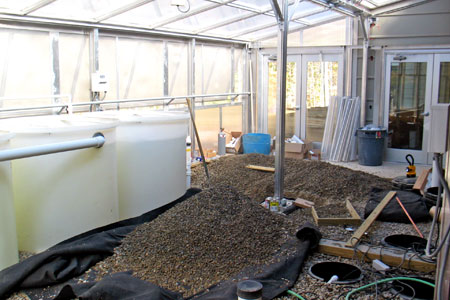
Wastewater Flow Monitoring
For more than 50 years, the Powdermill Nature Reserve has been dedicated to a mission of research, education, and preservation. This is accomplished through a wide variety of educational programs offered at the Florence Lockhart Nimick Nature Center. Scientists monitor and study changes in the reserve’s local ecology and wildlife populations. The site has served as a refuge for many plants and animals, which, as a result of habitat destruction, are becoming increasingly rare in the region. Ground was broken in 2006 to expand the center and its educational value through a $3.5 million Sustainable Facilities Development Project. The expansion is designed to provide an educational opportunity for visitors to understand green construction and how it can benefit construction projects. One component of the expansion is a “Marsh Machine” that processes all wastewater at the center.