
Green Roof Monitoring

Living roofs are natural, aesthetically pleasing solutions for decreasing stormwater runoff, reducing energy costs, moderating the urban heat island effect and providing additional habitat in the city. Water collected in these systems can be used to irrigate plants in the green roof system as well, and automated monitoring systems can help to maintain an overview of surface temperatures and weather and soil conditions to assist with management of the roof.
Green Roofs

Typical Green Roof Monitoring System
Demonstrating the value of a green roof can be done through an automated sensor network. NexSens green roof monitoring systems incorporate weather, surface temperature, soil moisture, and other types of sensors with data presentation on the WQData LIVE web datacenter.
The X3 environmental data logger is the central component of NexSens green roof monitoring systems. It is compatible with a wide range of sensor types and manufacturers and can transmit near real-time data to WQData LIVE via Wi-Fi, radio or cellular telemetry. The system is plug-and-play with waterproof UW connectors and automatic sensor detection, streamlining the installation process.
Tipping bucket rain gauges are commonly integrated for precipitation measurement, while the Stevens HydraProbe is a popular sensor for its suite of soil temperature, moisture and conductivity measurements. Advanced systems can even incorporate water flow sensors to quantify reduction of stormwater runoff.
Flexible mounting options for the X3 simplify installation on rooftop structures. Power for continuous operation is supplied with SP-series solar power packs or connection to mains power.
Contact a NexSens Applications Engineer today to discuss your green roof monitoring application.


Purchase in the USA
Visit our US distributor, Fondriest Environmental, to purchase online.

Purchase Internationally
Click the button below to find a local distributor.
Contact a NexSens Applications Scientist
Need help designing an Environmental IoT system? NexSens applications scientists will help you design the perfect monitoring system to meet field conditions and monitoring needs.
Case Studies
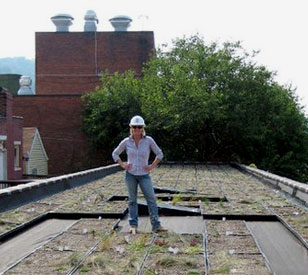
Green Roof Monitoring
Conservation Consultants, Inc. has been a strong advocate of energy conservation education for nearly 30 years. Its downtown Pittsburgh office, formerly an old vacant building, has become a green showcase with solar panels, state-of-the-art lighting, and efficient energy usage. Each year, hundreds of school children tour the CCI Center to learn the benefits of smart energy. One of CCI’s most recent green projects was the installation of a green roof atop its office building. A green roof is partially or completely covered with vegetation and soil, or another growing medium, planted over a waterproof membrane.
Read More About Green Roof Monitoring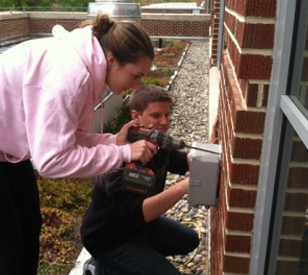
Educational Green Roof Project
Officials at Muhlenberg College, a small liberal arts school in Pennsylvania, had begun work on a sustainable redesign of the college’s student union building. As part of their planning process, they decided to consult with those who use the facility most – the students. After talking with them, it became clear that students at Muhlenberg wanted to retrofit the old student union building to be less impactful to the environment. But as the students made clear to the administrators, they still wanted the union to retain some of its old-school charm.
Read More About Educational Green Roof Project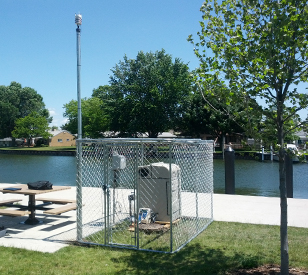
Tracking Green Parking Lot Runoff
When planners sat down to put together designs for a parking lot in southeast Michigan, they intended for it to be the end of the road for cars traveling through a series of parks near Detroit. That’s why the parking lot turned out so large, covering 42-acres near Lake St. Clair. But instead of serving as a prime parking area, the planners soon found that drivers had begun utilizing surrounding freeways and the lot was left practically empty year round. The giant lot, though it supports many seagulls that live around the lake, became a concern for park managers because of the runoff it contributes to Lake St. Clair.
Read More About Tracking Green Parking Lot Runoff